Black Holes & Singularities
JWST Spots "Naked" Black Hole Seeds That Skipped Stellar Birth
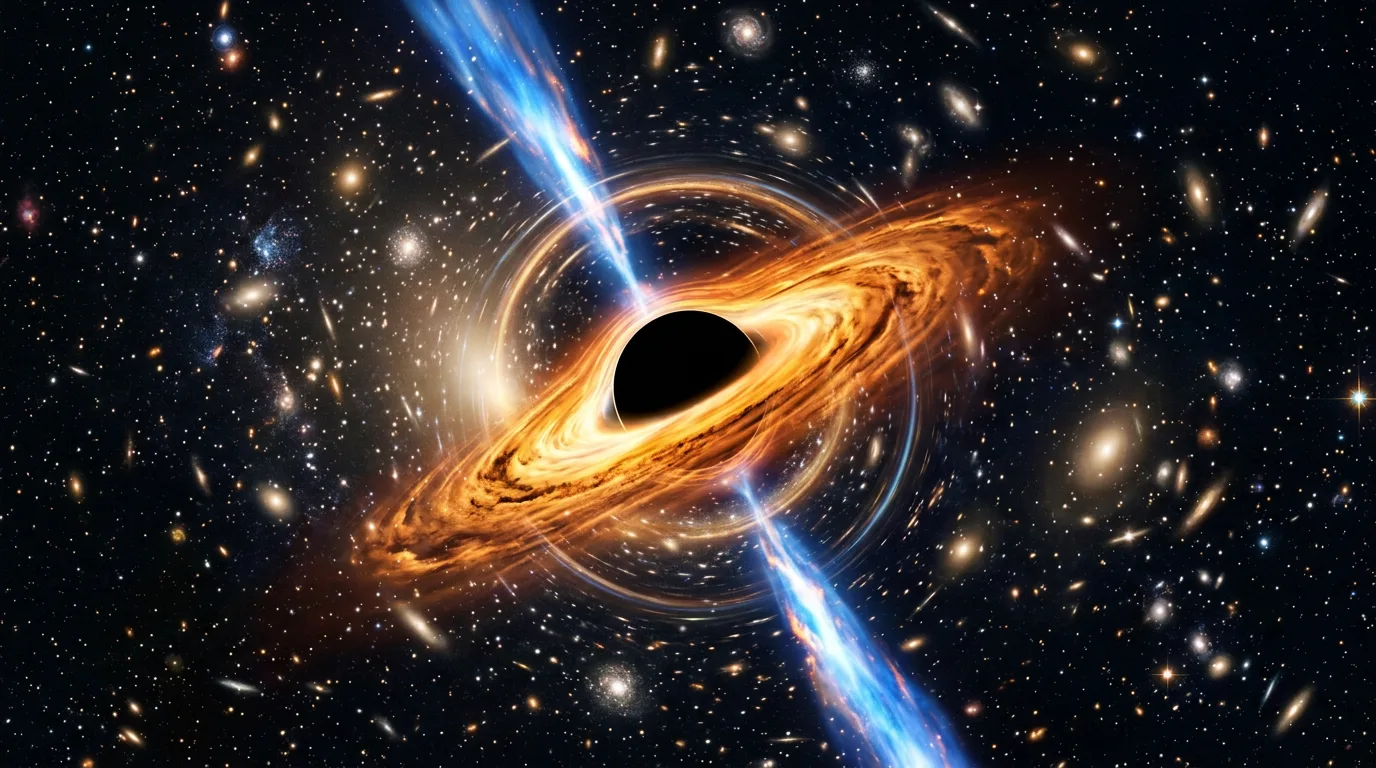
Several galaxies at redshift 10+ host black holes far too heavy for their stars, supporting the theory that some formed directly from collapsing gas clouds.
Black holes should start small, as the remnants of dead stars, and grow slowly. But the James Webb Space Telescope (JWST) keeps finding black holes in the infant universe that weigh as much as their entire host galaxies, only 450 million years after the Big Bang.
- Black hole-to-galaxy mass ratios near 1:1, versus ~1:1000 today
- Bright X-ray emission confirming active accretion
- Pristine gas with few heavy elements around the seeds
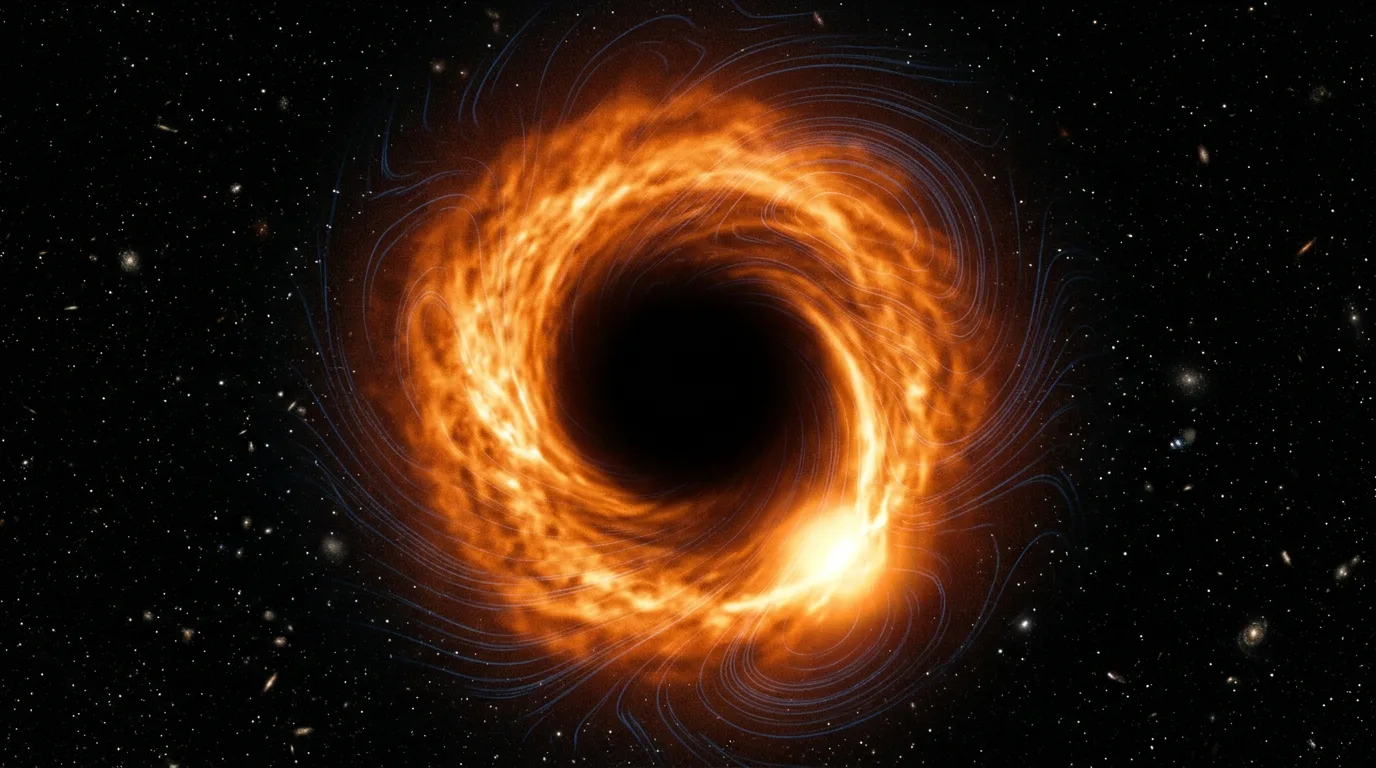
These "outsize" black holes are best explained by direct collapse: a giant cloud of hydrogen that bypassed star formation and fell straight into a black hole of 10,000 to 100,000 solar masses.
The growth problem
A black hole born from a dying star starts at perhaps 100 solar masses. To reach ten million solar masses in under a billion years, it must grow at the maximum physically allowed rate — the Eddington limit, where infalling gas shines so brightly its own radiation pushes back — without pause, for its entire life. Mergers help, but simulations struggle to assemble billion-solar-mass giants less than a billion years after the Big Bang (what astronomers call redshift 7) from stellar seeds alone. Something must give these objects a head start.
How to skip the star
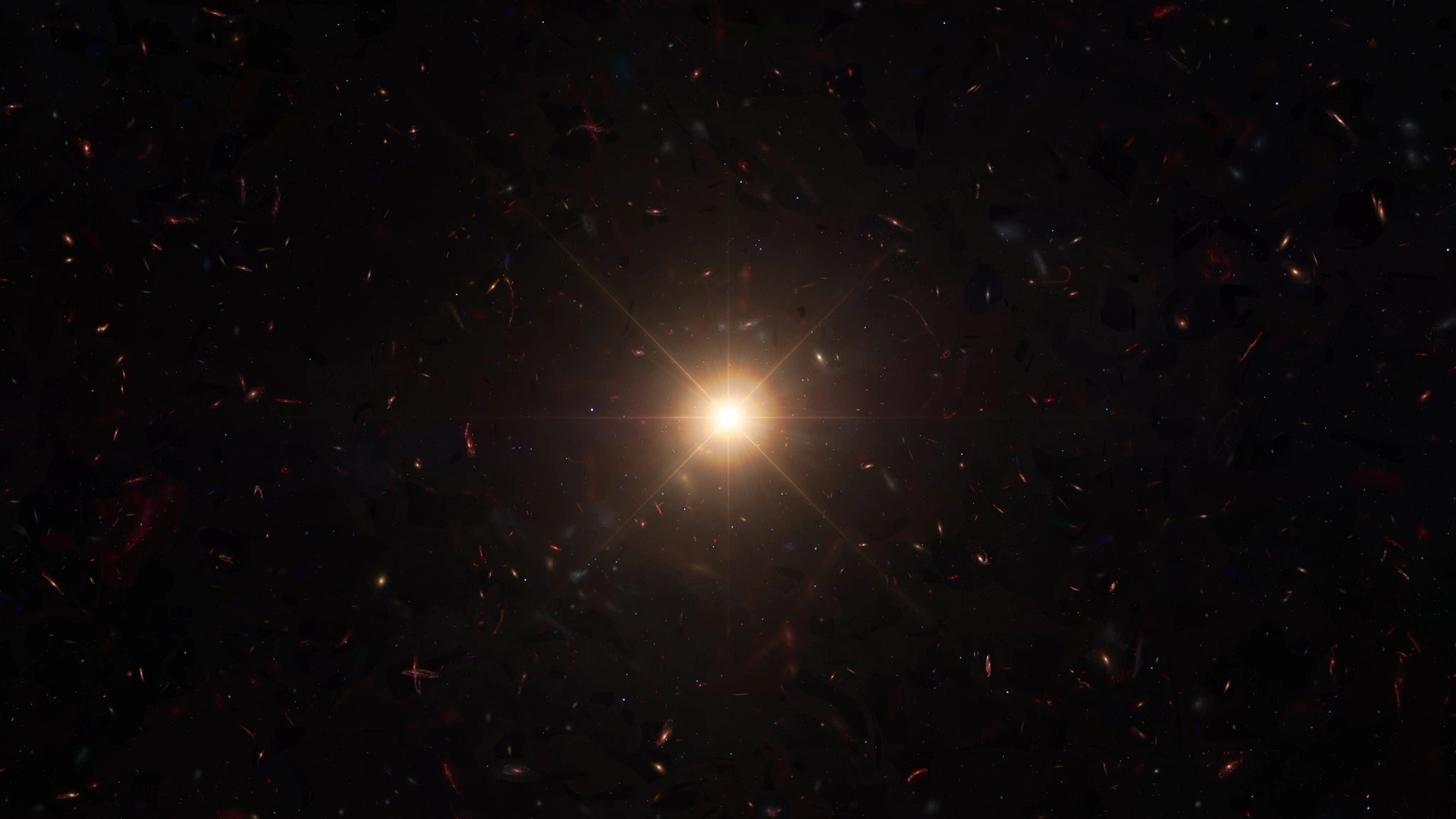
Direct collapse is the leading head-start theory, and it demands special conditions. Take a massive cloud of pristine hydrogen in the early universe. Normally it would cool, fragment, and form stars. But bathe it in intense ultraviolet light from a neighboring galaxy — Lyman-Werner radiation that destroys molecular hydrogen, the coolant — and the cloud cannot fragment. Instead the whole mass collapses at once, forming a supermassive star that burns out and implodes directly into a black hole of 10,000 to 100,000 solar masses: a seed already a thousand times heavier than any stellar remnant.
It is not the only heavy-seed idea. In dense young star clusters, runaway collisions can pile stars into a single monster that collapses into an intermediate-mass black hole. Both routes predict the same signature JWST is now seeing: black holes that outweigh their hosts by factors of ten to a hundred relative to the tight correlation between black hole mass and galaxy mass seen today.
Skeptics and the next tests
Not everyone is convinced. Sustained super-Eddington accretion — feeding faster than the textbook limit, which may be possible in thick, photon-trapping flows — could grow light seeds quickly without exotic births. Distinguishing the theories means measuring the host galaxies’ dynamics precisely enough to weigh both sides of the ratio, a job for JWST’s spectrographs and ALMA, the giant radio observatory in Chile. The ultimate arbiter may be LISA, the space-based gravitational wave detector, which will hear the mergers of these seeds across cosmic time and reconstruct their family tree directly.