Black Holes & Singularities
EHT Films a Hot Spot Orbiting Sagittarius A*
A sequence of polarized images captures a blob of plasma circling our galaxy’s central black hole every 70 minutes, just outside the horizon.
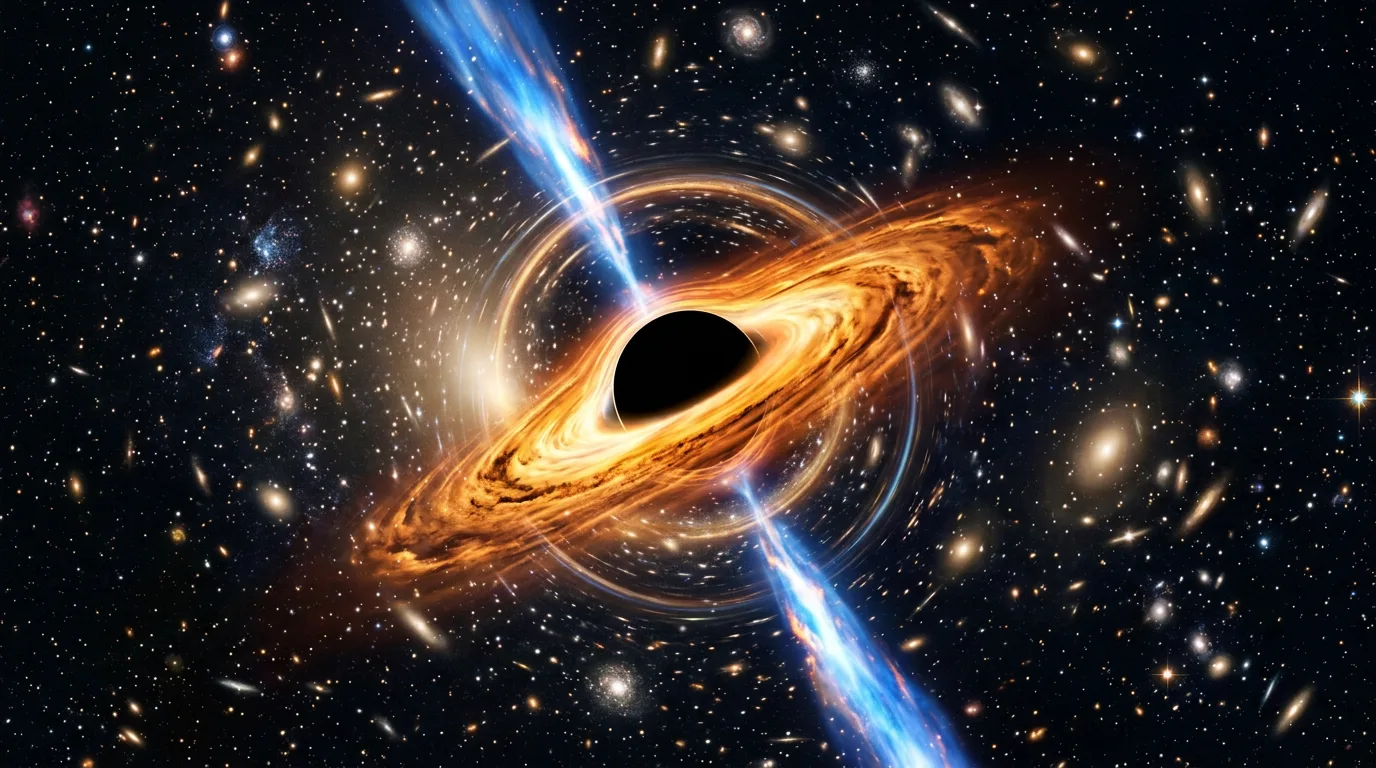
For the first time, the Event Horizon Telescope has stitched together enough observations of Sagittarius A* — the supermassive black hole at the center of our galaxy — to show motion, not just a still frame. During an X-ray flare, a compact hot spot of magnetized plasma appeared to circle the black hole at roughly 30% the speed of light.
Frame-dragging in action
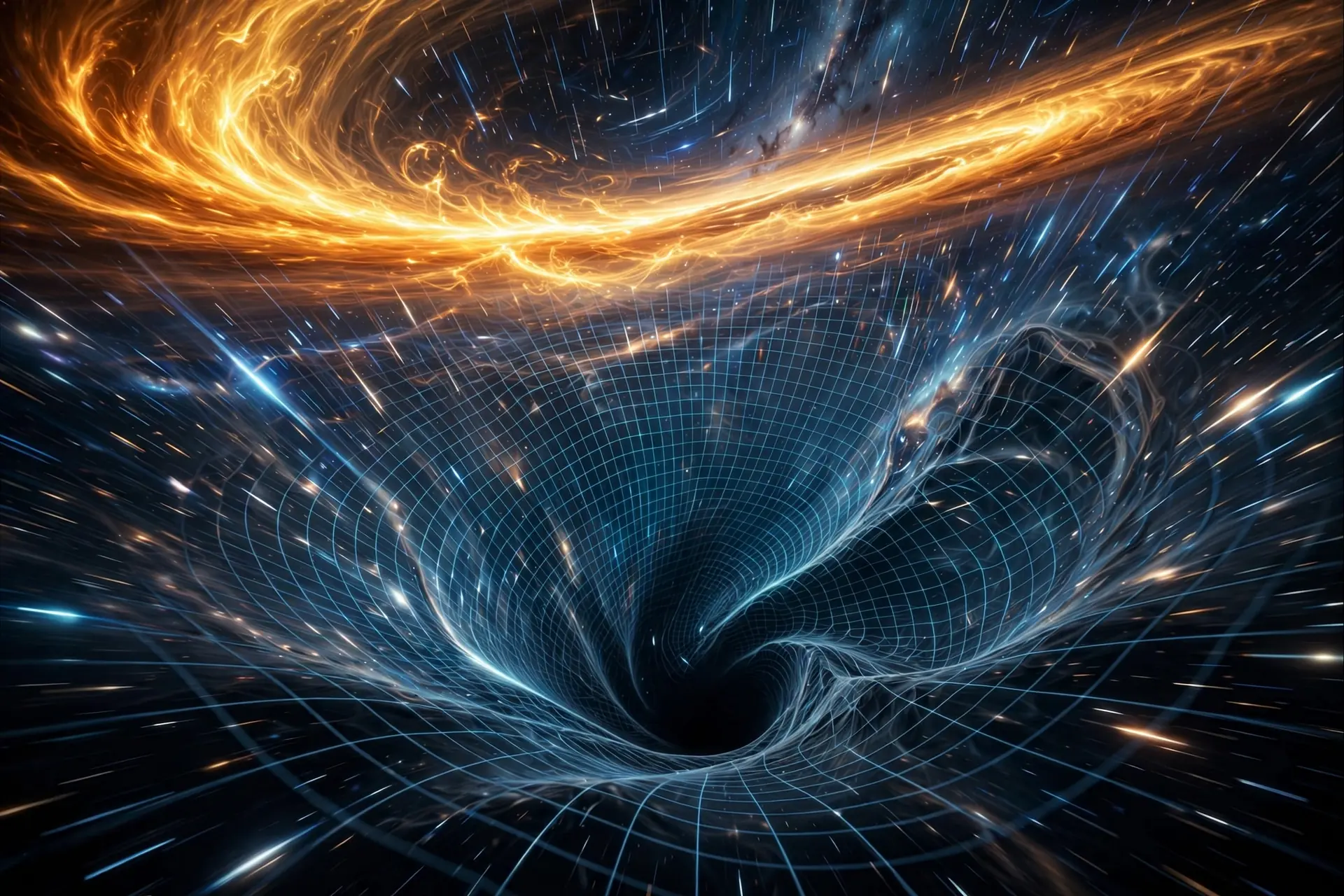
The orbit’s period and tilt are consistent with a rapidly spinning black hole whose rotation twists spacetime itself, an effect called frame-dragging. General relativity predicts it, but it has never been observed this close to a horizon.
“We’re watching matter surf the last stable orbit before it disappears from the universe.”
Why a movie matters more than a photo
The Event Horizon Telescope’s famous 2022 image of Sagittarius A* was, strictly speaking, a blur. Gas whips around our galaxy’s black hole in a matter of minutes, so any long exposure smears the motion into an average. The M87* portrait worked because that giant’s gas takes days to orbit. Turning Sgr A* from a still frame into a movie required new algorithms that reconstruct not just where the light is, but how it moves between observations — computational imaging pushed to its absolute limit.
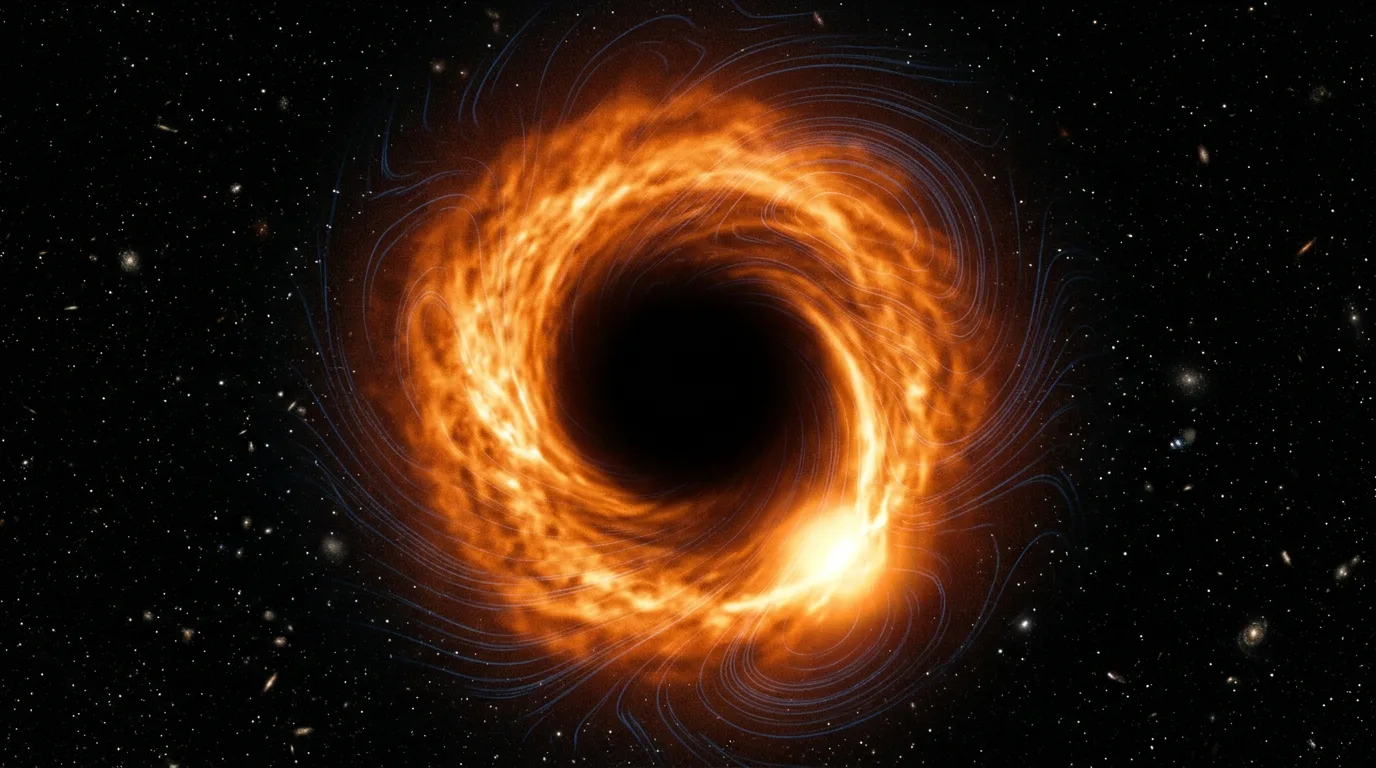
The breakthrough came during a flare. When Sgr A* erupted in X-rays, the EHT caught the afterglow in polarized radio light: a compact knot of magnetized plasma circling the shadow at roughly 30 percent of the speed of light, completing a lap every 70 minutes. That orbit sits just outside the innermost stable circular orbit — the last parking spot in the universe before the plunge.
Reading the black hole’s spin
A hot spot is more than a light show; it is a clock. In Einstein’s theory, a spinning black hole drags spacetime around with it, an effect called frame-dragging. The period and tilt of the hot spot’s orbit encode that spin. Sgr A*’s rotation has been notoriously hard to pin down, with estimates ranging from sluggish to near-maximal. An orbiting flare gives astronomers an independent handle, one that does not depend on the messy details of the accretion flow — the swirling gas feeding the black hole.
The polarization adds another layer. The orientation of the radio waves traces the magnetic field threading the plasma, and the pattern looks strikingly ordered — field lines wound into a funnel. That is exactly the configuration theorists invoke to launch relativistic jets, the mechanism by which black holes return energy to their galaxies. We may be watching the jet engine idling.
What comes next
The next-generation EHT will add dishes and observe at higher frequencies, turning snapshots into genuine video. Coordinated campaigns pairing the EHT with X-ray telescopes could catch the next flare from ignition to fade, linking the high-energy eruption to the orbiting aftermath. Sgr A* is the one supermassive black hole close enough to study as a dynamic system rather than a portrait — our private laboratory for gravity at its most extreme.