Cosmic Mysteries
The Fermi Paradox: Where Is Everybody?
The galaxy should be crawling with civilizations. Seventy-five years after Enrico Fermi asked the question over lunch, the silence is still deafening — and the possible answers keep getting stranger.
In the summer of 1950, physicist Enrico Fermi was walking to lunch at Los Alamos when conversation turned to flying saucers and the odds of interstellar travel. Fermi ran some quick numbers in his head — the galaxy is old, stars are many, and even slow expansion would colonize it in a cosmic blink — and then asked the most famous question in science: “Where is everybody?” The math says they should be here. The sky says otherwise. That contradiction is the Fermi paradox.
The case for a crowded galaxy
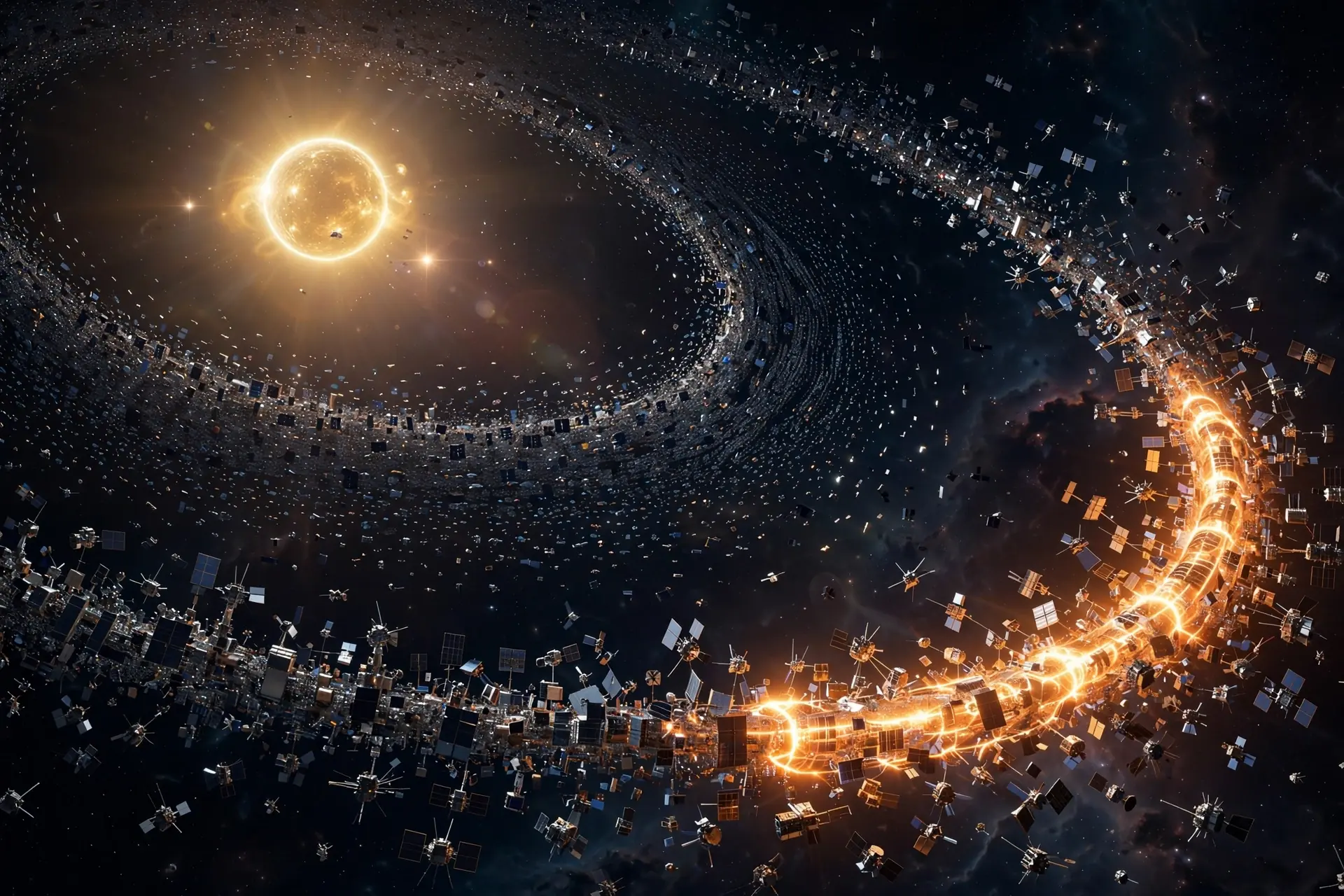
The argument is disarmingly simple. The Milky Way holds hundreds of billions of stars, many billions of years older than the Sun. Exoplanet surveys tell us rocky worlds in habitable zones are common. Even at a crawl — a civilization expanding at a tenth of a percent of light speed — the galaxy could be fully settled in under 100 million years, a blink against its 13.6-billion-year age. If technological life is even moderately common, the galaxy should show signs of engineering everywhere. It does not.
The Great Filter
Economist Robin Hanson’s 1998 proposal reframes the silence as data: somewhere along the road from dead matter to galaxy-spanning civilization, there is a step so improbable it almost never happens — the Great Filter. The terrifying question is whether the filter is behind us (perhaps the origin of life itself is the miracle, and we are the lucky winners) or ahead of us (perhaps every civilization eventually destroys itself, and our turn is coming).
“Where is everybody?”
Listening harder
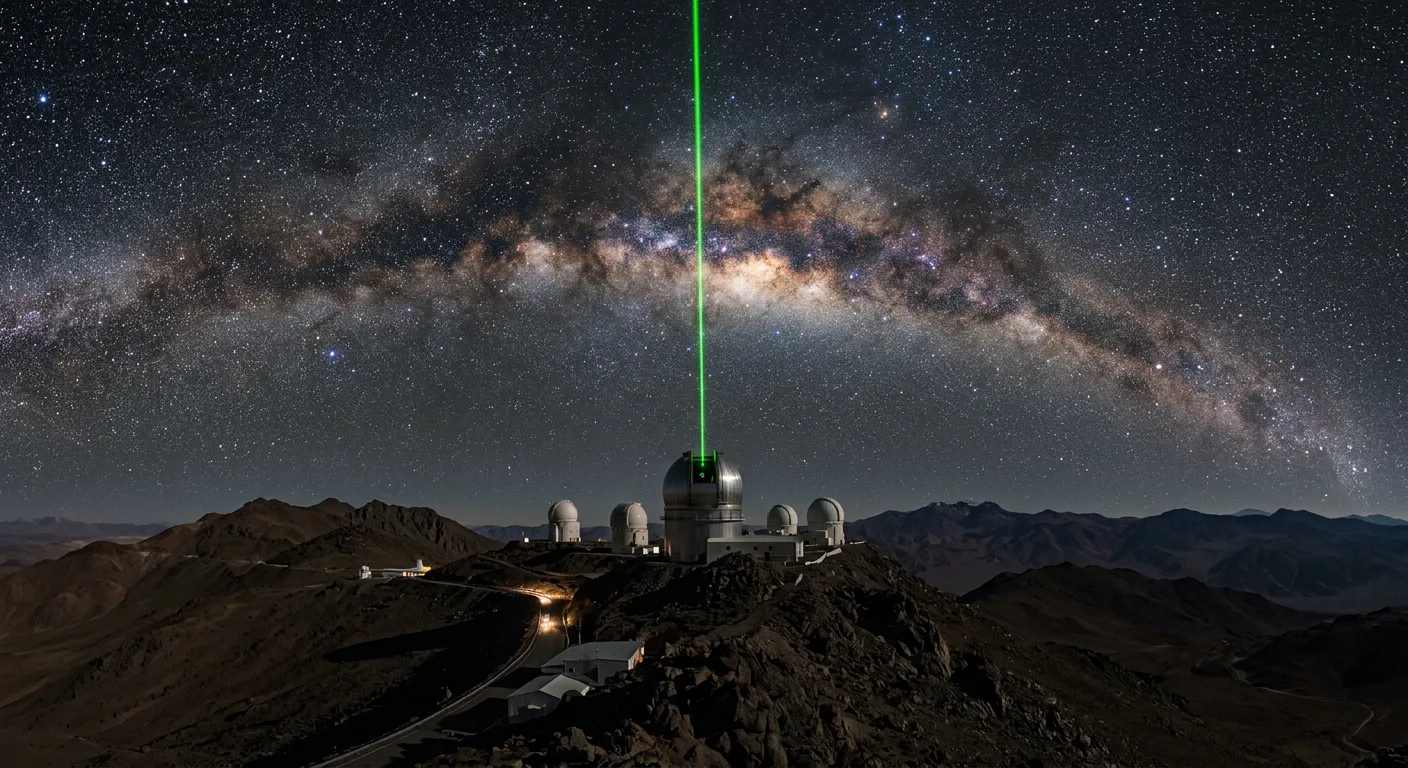
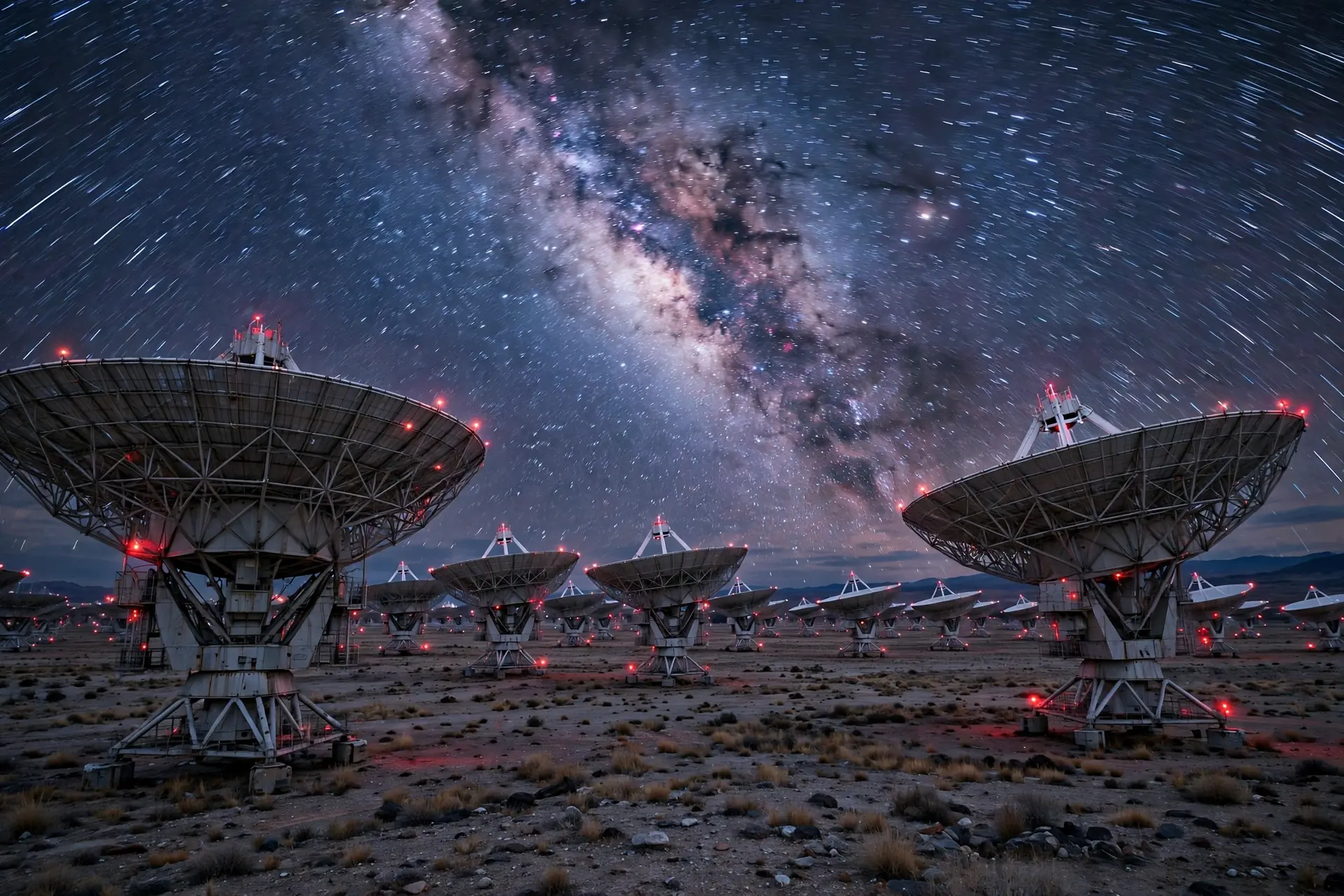
Breakthrough Listen, the most ambitious SETI (Search for Extraterrestrial Intelligence) program ever, has scanned millions of stars across billions of radio channels and found nothing confirmed. But absence of evidence is not evidence of absence: we have searched a puddle while the ocean waits. New instruments will probe fainter signals, wider bands, and stranger technosignatures — signs of alien technology: laser pulses, megastructure heat, atmospheric pollution on exoplanets. Seventy-five years on, Fermi’s lunch-table question remains open, and every year of silence makes the eventual answer — whatever it is — more profound.
The solutions zoo
Proposed answers fall into three families. Maybe they are rare: the Rare Earth argument says complex life needs an improbable stack of luck — a stable star, a big moon, plate tectonics, a Jupiter to sweep up comets — and we drew the winning ticket. Maybe they are silent: the zoo hypothesis imagines we are being observed but not contacted, while the transcension hypothesis suggests advanced minds turn inward, into engineered virtual worlds, rather than outward. Or maybe they are gone: the Great Filter argues that some step between chemistry and starfaring civilizations is lethally improbable — and the terrifying question is whether the filter lies behind us or ahead. Darker variants exist too: the “dark forest” idea, from Liu Cixin, that the universe rewards silence so everyone hides; and the timing argument that we are simply early to a young universe.
The numbers that sharpen it
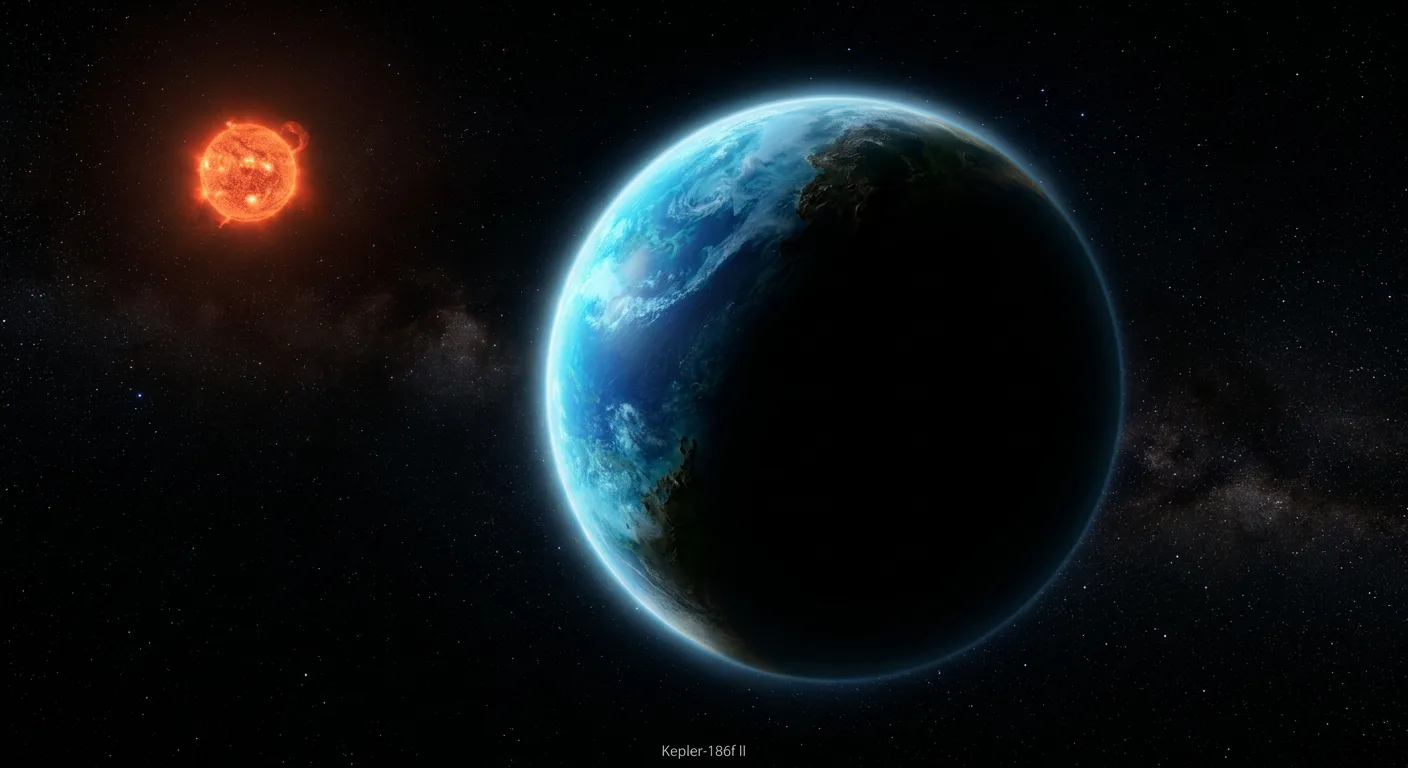
Fermi asked his question before a single exoplanet was known. We now know that roughly one in five Sun-like stars hosts an Earth-size planet in its habitable zone — billions of plausible cradles in our galaxy alone. Every term of the Drake equation — the formula for estimating how many civilizations might exist — that we can measure has come back more optimistic than the 1950s guesses, which makes the silence louder, not softer. Michael Hart’s 1975 timescale argument still bites: even at slower-than-light speeds, a single civilization could colonize the galaxy in tens of millions of years, a blink in cosmic time. Somebody should have been here already.
What silence would mean
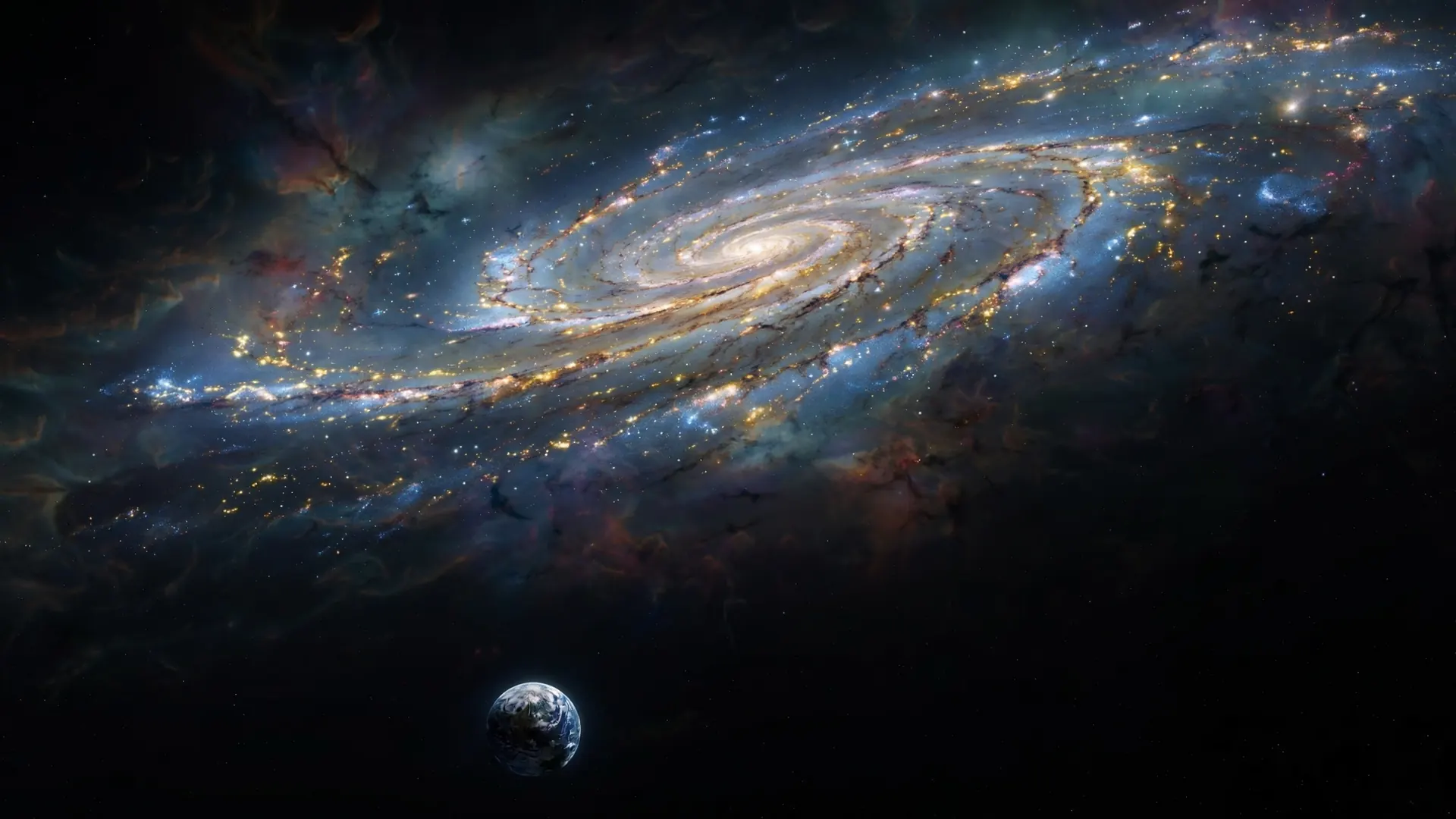
There are only two possible endings, and both are staggering. If we are alone — if the filter is behind us and life is a near-miracle — then this pale blue dot carries the only meaning in a hundred billion galaxies, and its preservation is the most important task in the universe. If we are merely first, or merely uncontacted, then the galaxy is an old neighborhood we have not yet met. Either way, the search is worth continuing: the silence is data, and it is telling us something enormous. We just have not decoded it yet.
The grabby aliens model
The sharpest modern formulation comes from Robin Hanson and colleagues: the "grabby aliens" model. Suppose even a small fraction of civilizations expand aggressively, at a fraction of light speed, visibly transforming galaxies as they go. We see no transformed galaxies, yet we exist in a universe that looks untouched. Together, those two facts tightly constrain when such civilizations can appear. The model’s uncomfortable conclusion: we are early. Grabby civilizations are coming, but the universe is young enough that they have not arrived yet. Our cosmic loneliness may be a matter of timing, not destiny.
Are we looking in the wrong way?
Every SETI search bakes in assumptions about what aliens do. Radio SETI assumes they broadcast; optical SETI assumes they flash lasers; infrared SETI assumes they build big and leak heat. But a civilization a million years ahead might communicate with physics we have not discovered, or leave artifacts instead of signals — self-replicating probes parked in stable orbits, or engineered structures hiding in plain sight in survey data. Artifact SETI, the search for physical evidence in our own solar system, is gaining respect precisely because it does not require catching anyone in the act of talking. Perhaps the silence is not absence. Perhaps we have been listening for drums while the universe sends letters.