Cosmic Mysteries
A Sharper Spectrum of K2-18 b Reopens the Ocean World Debate
Fresh transmission data tightens constraints on methane and carbon dioxide in the atmosphere of the sub-Neptune 124 light-years away.
Six passes of the James Webb Space Telescope (JWST) watching the planet K2-18 b cross in front of its star have produced the sharpest measurement yet of its air — and reopened the question of whether this distant world, orbiting in the habitable zone of a cool red dwarf, holds an ocean.
What the data shows
- Methane and carbon dioxide detected at high confidence
- No significant ammonia, consistent with a water-rich interior
- Earlier dimethyl sulfide hints not confirmed at this precision
“We are not claiming life. We are claiming that K2-18 b is one of the most compelling laboratories we have for testing the hycean hypothesis.”
The hycean hypothesis
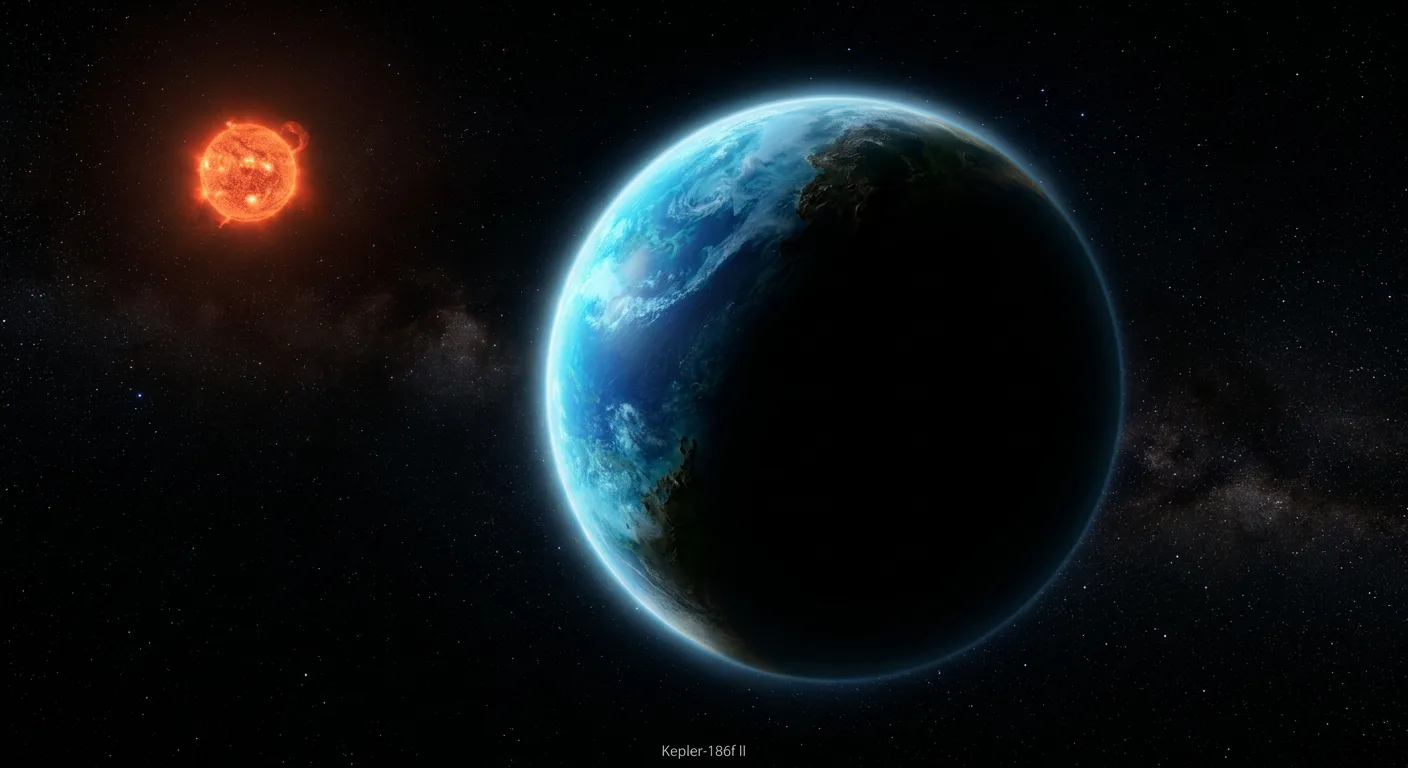
K2-18 b is a sub-Neptune: about 8.6 times Earth’s mass and 2.6 times its radius, orbiting in the habitable zone of a cool red dwarf 124 light-years away. The "hycean" idea proposes that some such worlds are hydrogen-rich ocean planets — a deep water layer beneath a thick H2 atmosphere. They matter because their puffy atmospheres produce transit signals ten times stronger than an Earth twin’s, making them the first habitable-zone worlds whose air we can actually analyze.
The dimethyl sulfide saga
In 2023, a team reported a tentative detection of dimethyl sulfide — a molecule that, on Earth, is produced almost exclusively by marine life. The claim electrified the field and then ran into trouble: reanalyses found the signal marginal, and chemists pointed to possible non-biological (abiotic) pathways and spectral confusion with other molecules. The honest state of play is that DMS on K2-18 b is not confirmed. It is a hint awaiting better data, and the debate itself has sharpened how the field vets biosignature claims — claimed chemical hints of life.
What the new spectrum actually says
Combining six JWST transits tightens the picture considerably. Methane and carbon dioxide are detected at high confidence; ammonia is absent, which is exactly what you expect if an ocean is dissolving it out of the atmosphere. The spectrum is consistent with the hycean picture and inconsistent with a mini-Neptune of pure gas. What it is not — yet — is evidence of life. The difference between "consistent with an ocean" and "inhabited" is the entire game.
The red-dwarf problem
Even if the ocean is real, habitability around red dwarfs is genuinely hard. These stars flare violently, potentially stripping atmospheres; their habitable zones are so close that planets likely become tidally locked, with one face in eternal day. K2-18 b may or may not thread all these needles. Its value is not as a second Earth — it is as the first ocean-world candidate we can interrogate, molecule by molecule, from 124 light-years away.