Missions
JWST Reveals Hidden Star Nurseries in Carina’s Cosmic Cliffs
New near-infrared mosaics expose hundreds of previously unseen protostars and jets carving through the walls of the Carina Nebula.
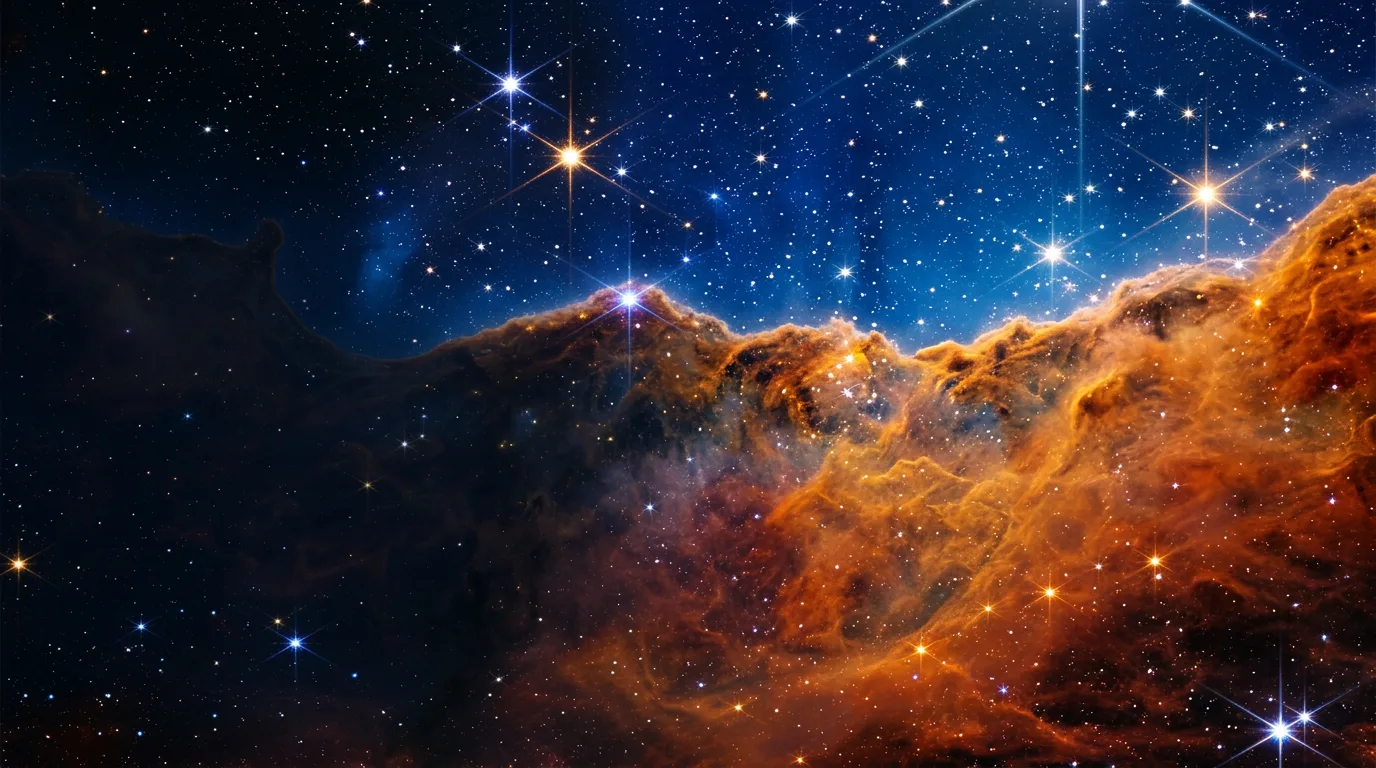
The James Webb Space Telescope has returned its deepest look yet into NGC 3324, the star-forming region at the northwestern edge of the Carina Nebula, mapping a population of embryonic stars completely veiled by dust in visible light.
- 312 candidate protostars identified, 186 of them new
- 24 molecular hydrogen outflows traced to their source stars
- Evidence of triggered star formation along the ionization front
“It is like watching a time-lapse of stellar birth frozen into a single frame.”
Why infrared changes everything
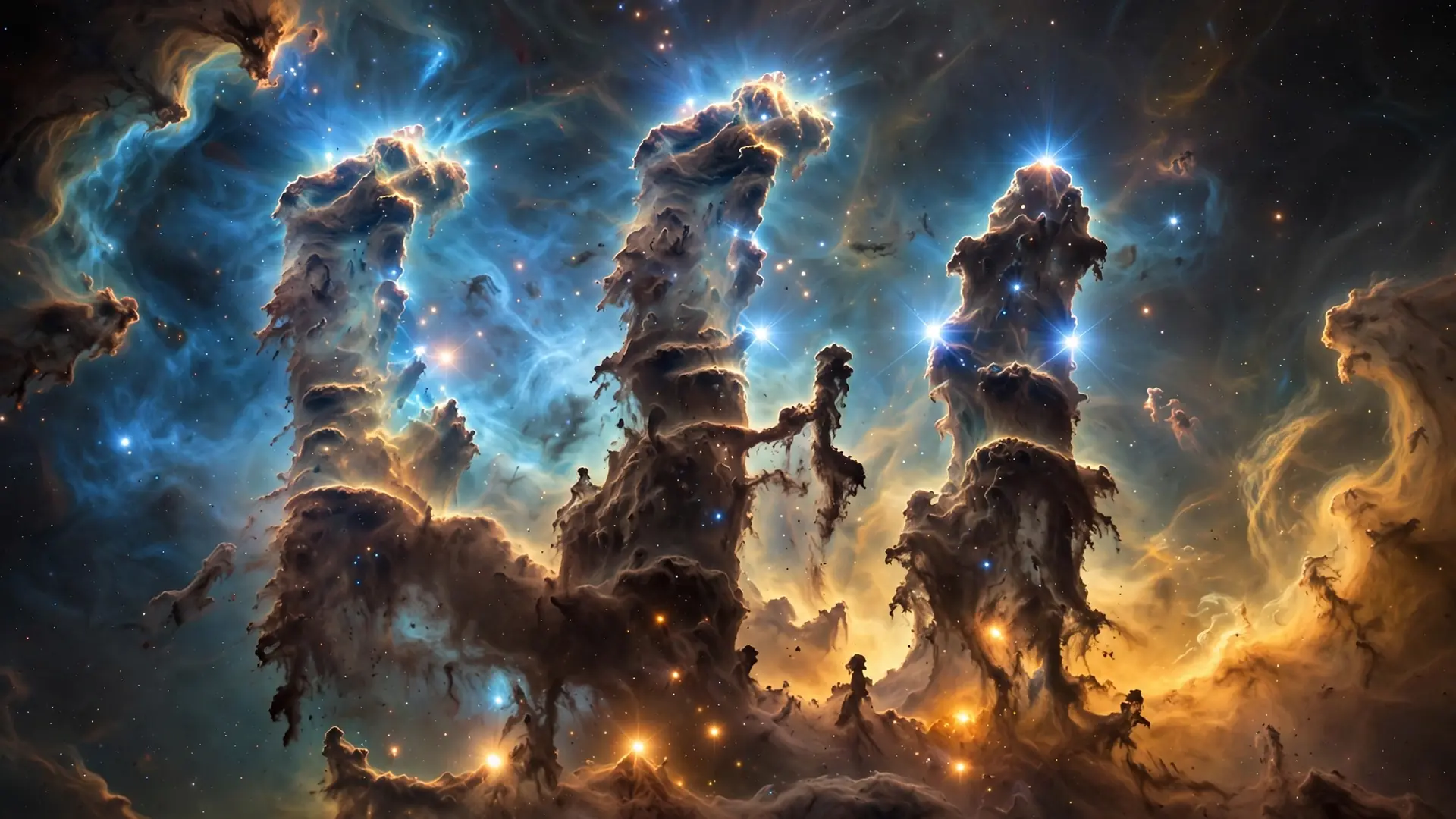
Star formation hides behind its own raw material. The densest nurseries are wrapped in dust that blocks visible light completely — Hubble’s iconic Pillars of Creation show the surfaces of these clouds, not the embryos inside. JWST’s near-infrared camera, NIRCam, sees at wavelengths where dust turns translucent, and the new Carina mosaics exploit that ruthlessly: the same cliffs Hubble photographed as glowing walls now resolve into hundreds of individual infant stars, many still wrapped in the envelopes of gas they are still gathering.
Reading stellar birth
The census is striking: 312 candidate protostars, 186 of them never seen before, and 24 molecular hydrogen outflows — the jets that young stars fire as they feed, each one tracing back to its source like a contrail to an engine. Along the ionization front — the boundary where ultraviolet light from massive stars is eating into the cloud — the protostars pile up: textbook triggered star formation, as the advancing front compresses gas into the next generation. It is sequential stellar birth, caught in the act.
What’s next
Imaging finds the babies; spectroscopy raises them. Follow-up with JWST’s spectrograph, NIRSpec, will weigh these protostars and check which ones still hold planet-forming disks, while ALMA, the giant radio observatory in Chile, maps the cold gas reservoirs feeding them. Carina is the template: the same techniques are now being turned on nurseries across the galaxy, building the first statistically serious census of how stars — and the planetary systems around them — actually begin.