Missions
Ship-to-Ship Refueling: the Key to the Moon and Mars
Starship can reach orbit, but it cannot reach the Moon without filling up in space. How SpaceX plans to turn Earth orbit into a gas station, and why cryogenic refueling is the hardest problem in the Artemis program.
Starship is the largest flying object ever built, and it still cannot get to the Moon on a single tank of gas. That is not a design flaw. It is the rocket equation doing its merciless arithmetic: to land on the Moon and come home, a Starship needs on the order of a thousand tonnes of propellant, and no rocket can lift that much fuel plus itself off the Earth in one go. The entire Artemis lunar program — NASA’s campaign to return astronauts to the Moon — therefore hinges on a capability no one has ever demonstrated at scale: refueling a spacecraft with super-cold, cryogenic propellants in orbit.
Why Starship can’t just go
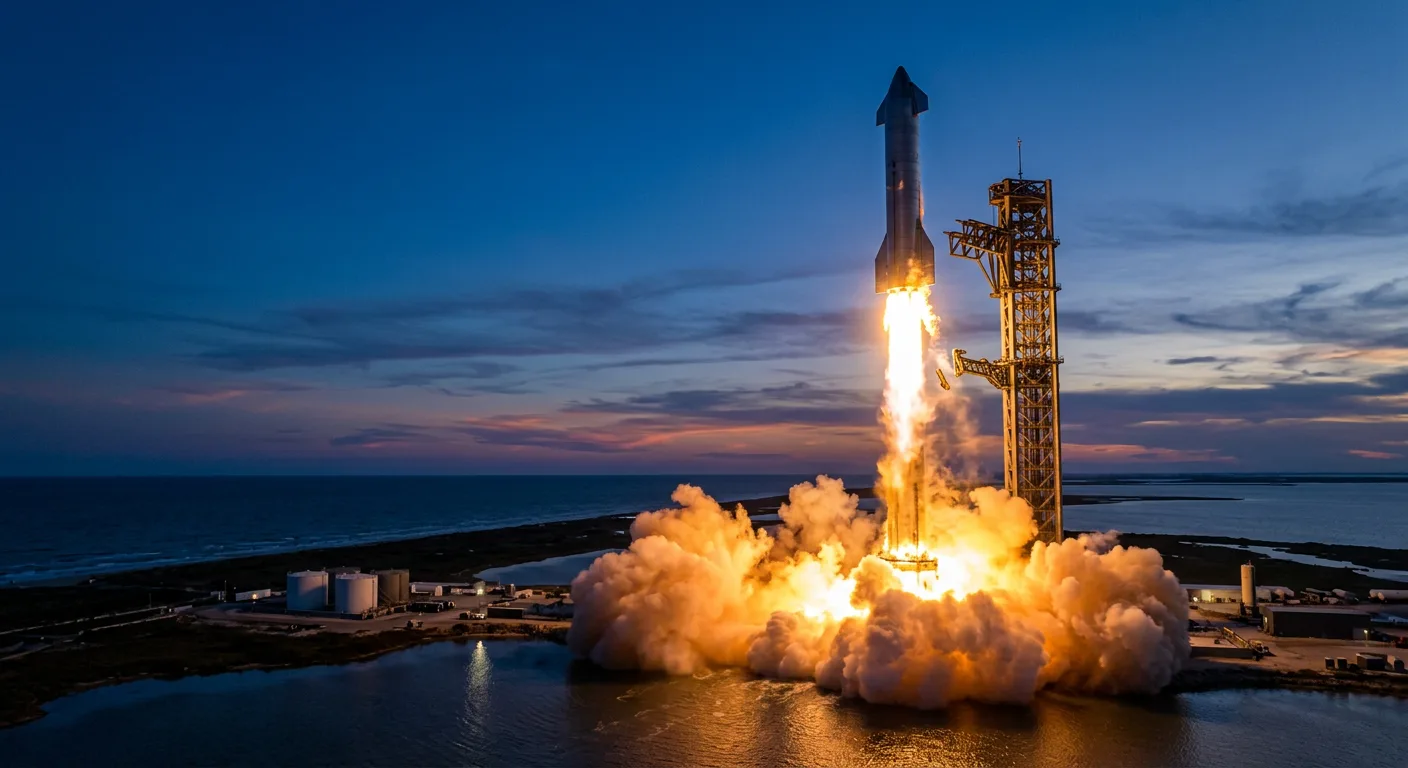
A Starship stacked on its Super Heavy booster lifts off with roughly 5,000 tonnes of methane and liquid oxygen. Almost all of that is burned just climbing to orbit. What arrives in low Earth orbit is an empty-ish ship with perhaps a tenth of the propellant needed for a lunar round trip. NASA’s Human Landing System architecture — the plan for the Starship-based Moon lander — solves this the way long-haul aviation solved range: with a fuel stop. Tanker Starships launch one after another, offload their cargo into a depot or directly into the lunar lander, and only then does the Moon-bound ship depart.
- A lunar mission may need 10 or more tanker flights to fill one Moon-bound Starship
- Transfers happen at around 210 km altitude, in free fall, with both vehicles docked
- NASA requires a successful ship-to-ship demo before Artemis III can fly crew
- The same technique is mandatory for any crewed Mars mission
The cryogenic problem
Moving gasoline between trucks is easy. Moving super-cold liquids between spacecraft is one of the hardest problems in aerospace. Methane must stay near –162°C and liquid oxygen near –183°C, or they boil into gas and vent away. In microgravity, liquid does not sit at the bottom of a tank; it clings to walls in blobs, so engineers must settle it with gentle thruster burns before pumping. Docking two vehicles the length of a football field, then pushing hundreds of tonnes of fluid between them without losing it to boil-off or slosh, has never been done with cryogenics.
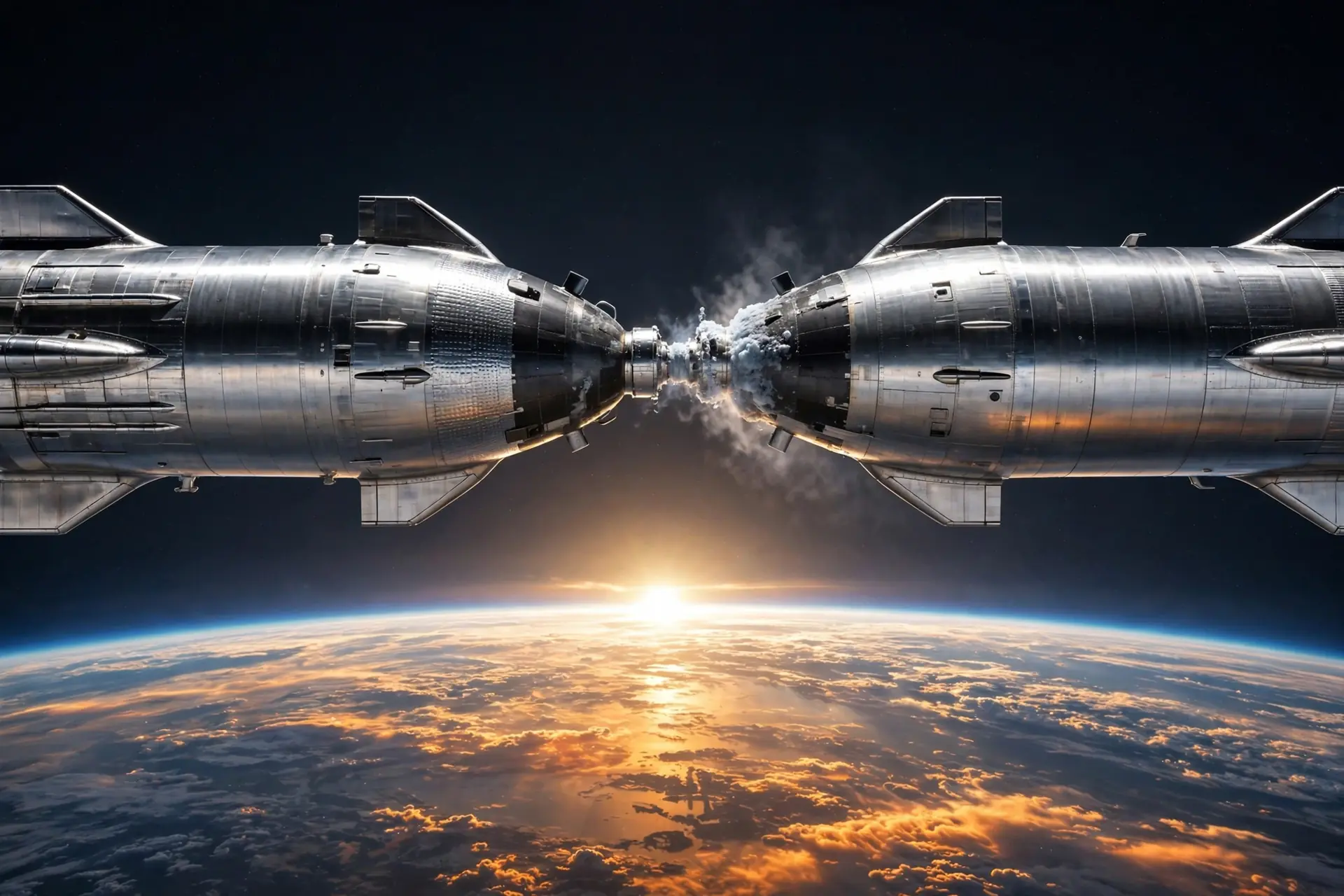
SpaceX has been climbing this ladder step by step. Under a NASA technology-demonstration grant (from its “Tipping Point” program), the company flew an internal propellant transfer demonstration during its 2024 flight test, moving cryogenic liquid between tanks inside a single ship. The next rung is the real prize: two Starships rendezvousing, docking, and transferring propellant ship to ship. NASA is watching closely, because the Artemis III landing cannot happen until this works reliably.
Why it matters beyond the Moon
Orbital refueling is not just a lunar trick. Every serious Mars architecture needs it, and a permanent propellant depot in Earth orbit would become the most valuable piece of infrastructure in space: the gas station at the edge of the map. Whoever masters cryogenic transfer first effectively controls the logistics of deep space. The rockets get the glory, but the fuel depot decides who actually goes.
“Rockets are the easy part. The future of deep space belongs to whoever learns to run a gas station in orbit.”