Missions
Why Isn't Artemis III Going to the Moon?
Artemis III was supposed to return astronauts to the Moon. Instead, four astronauts will spend two weeks in Earth orbit, rehearsing the docking the landing depends on.
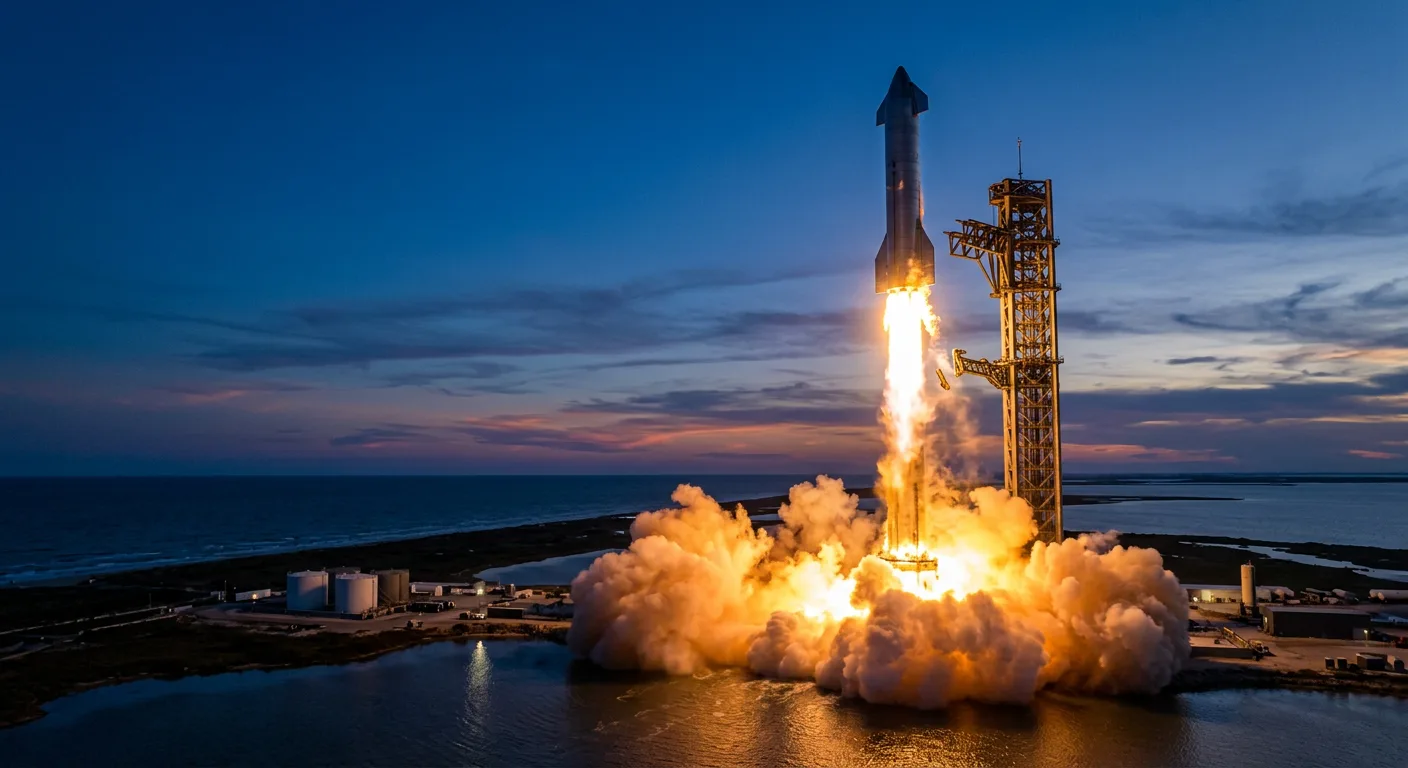
The countdown will sound exactly like a Moon mission. Four astronauts strapped into an Orion capsule, perched on the Space Launch System at Launch Complex 39B, thundering off a Florida pad on a pillar of fire. The Moon will be hanging up there, bright and close enough to read by. Artemis III will fly toward it for about eight minutes, and then stop: 460 kilometers up, in low Earth orbit, the same crowded lane the International Space Station calls home.
Here is the short version. NASA’s Artemis III, launching no earlier than mid-2027, will not go to the Moon at all. Four astronauts will spend about two weeks circling Earth, docking their Orion capsule with test versions of both commercial lunar landers, to prove the rendezvous works before anyone trusts it a quarter-million miles from home.
For years, Artemis III was the headline act: the first crewed Moon landing since Apollo 17, aimed at the lunar south pole, the mission every rendering and press kit was selling. That mission no longer exists. What replaced it might be the most important flight NASA has planned in decades, precisely because it goes nowhere.
The February pivot
On February 27, 2026, NASA Administrator Jared Isaacman stood at Kennedy Space Center and did something rare in spaceflight: he admitted the plan was wrong. Jumping straight from a crewed lunar flyby to a crewed landing, he argued, was too big a leap for spacecraft that had never docked together in space.
“We didn’t go right to Apollo 11. We had a whole Mercury Program, Gemini, lots of Apollo missions before we ultimately landed.”
His diagnosis went deeper than one mission. Artemis was flying about once every three years, a cadence Isaacman called uneconomical and corrosive: teams lose their edge between flights, old problems recur, and institutional memory leaks away. NASA would standardize the SLS in its current Block 1 configuration, cancel the planned upgrades, and fly more often. Artemis III became the extra step the program never had: a full-dress rehearsal in the safest theater available.
The new sequence is public and specific. Artemis III flies no earlier than mid-2027 as a crewed docking test. The first lunar landing moves to Artemis IV in early 2028, with Artemis V possibly following later that year. China, meanwhile, is working toward its own crewed landing around 2030. The race did not pause. The track just gained an extra lap.
The two-week ballet
So what do four astronauts actually do for two weeks in Earth orbit? They practice the single maneuver the entire Moon program hinges on, twice, with two different spacecraft that have never met.
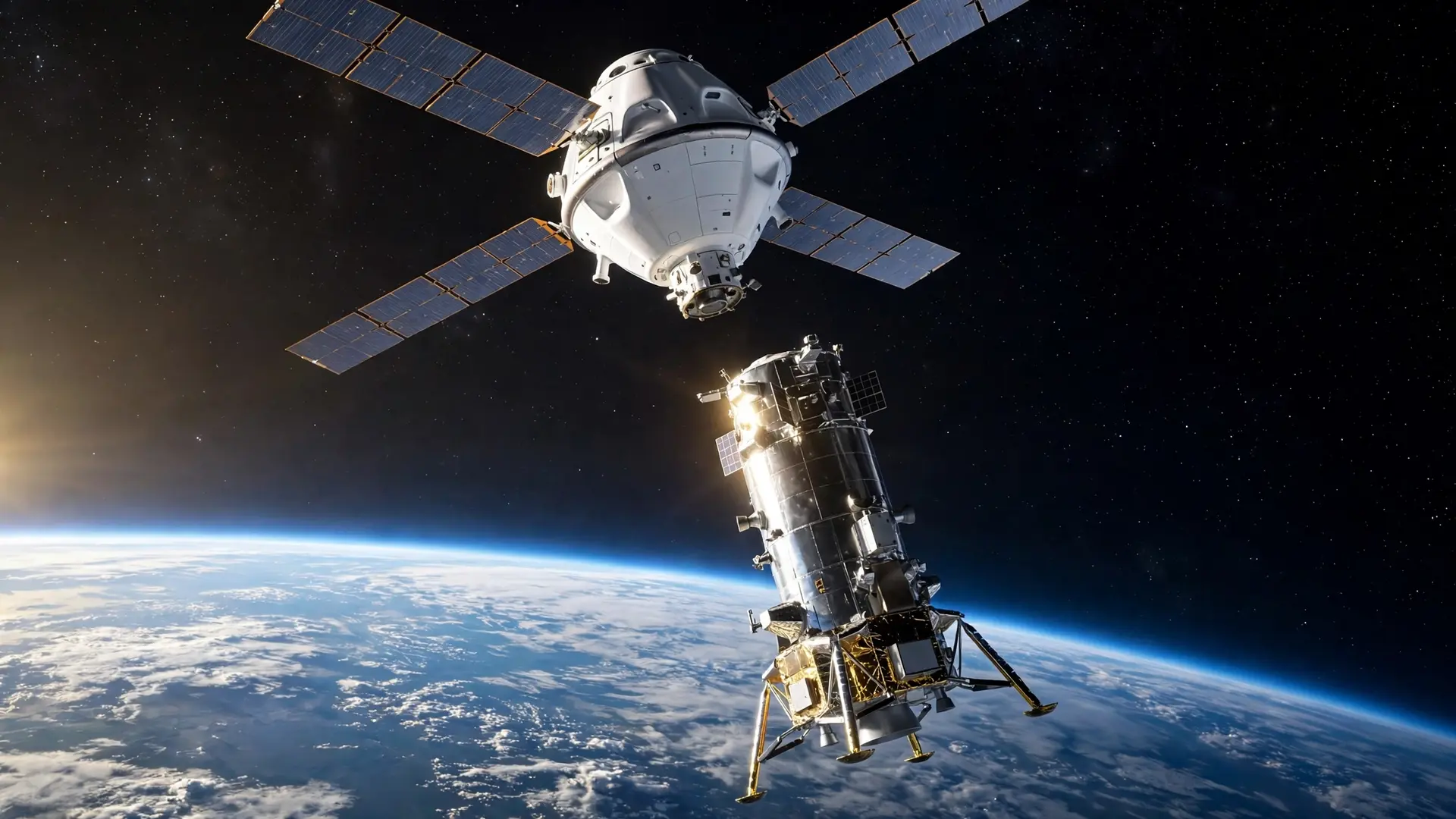
The choreography, as NASA described it in June 2026: after Orion settles into its parking orbit, the first commercial lander arrives, Blue Origin’s Blue Moon. Orion sidles up, docks, and stays linked for about two days. The astronauts climb aboard and put the vehicle through its paces, evaluating the life support systems that, as Artemis program manager Jeremy Parsons noted, can only be tested in orbit. They will even wrestle a mass simulator standing in for Axiom Space’s new moonwalking suit, learning how its bulk moves in weightlessness.
Then Orion undocks, backs away, and does it all again with the second lander, SpaceX’s Starship, for about a day. This time the crew stays inside Orion. The Starship test article will not yet carry a working crew cabin or life support.
“Their crew cabin is coming along later in their development cycle.”
So why, you might wonder, does NASA need to rehearse parking? Because this is not parking. Both spacecraft will be falling around Earth at nearly eight kilometers per second, and the docking has to be gentle: centimeters per second of closing speed, pressure seals seating perfectly, two separately engineered docking systems agreeing on the first try. Each lander brings its own geometry, its own software, its own flight control team. Artemis III will fly three rockets from three launch pads in tight sequence and ask them to meet in the dark. No crewed spacecraft has rendezvoused with two separate vehicles since the Soviet Soyuz T-15 hopped between the Salyut 7 and Mir stations in 1986.
The cheapest classroom in space
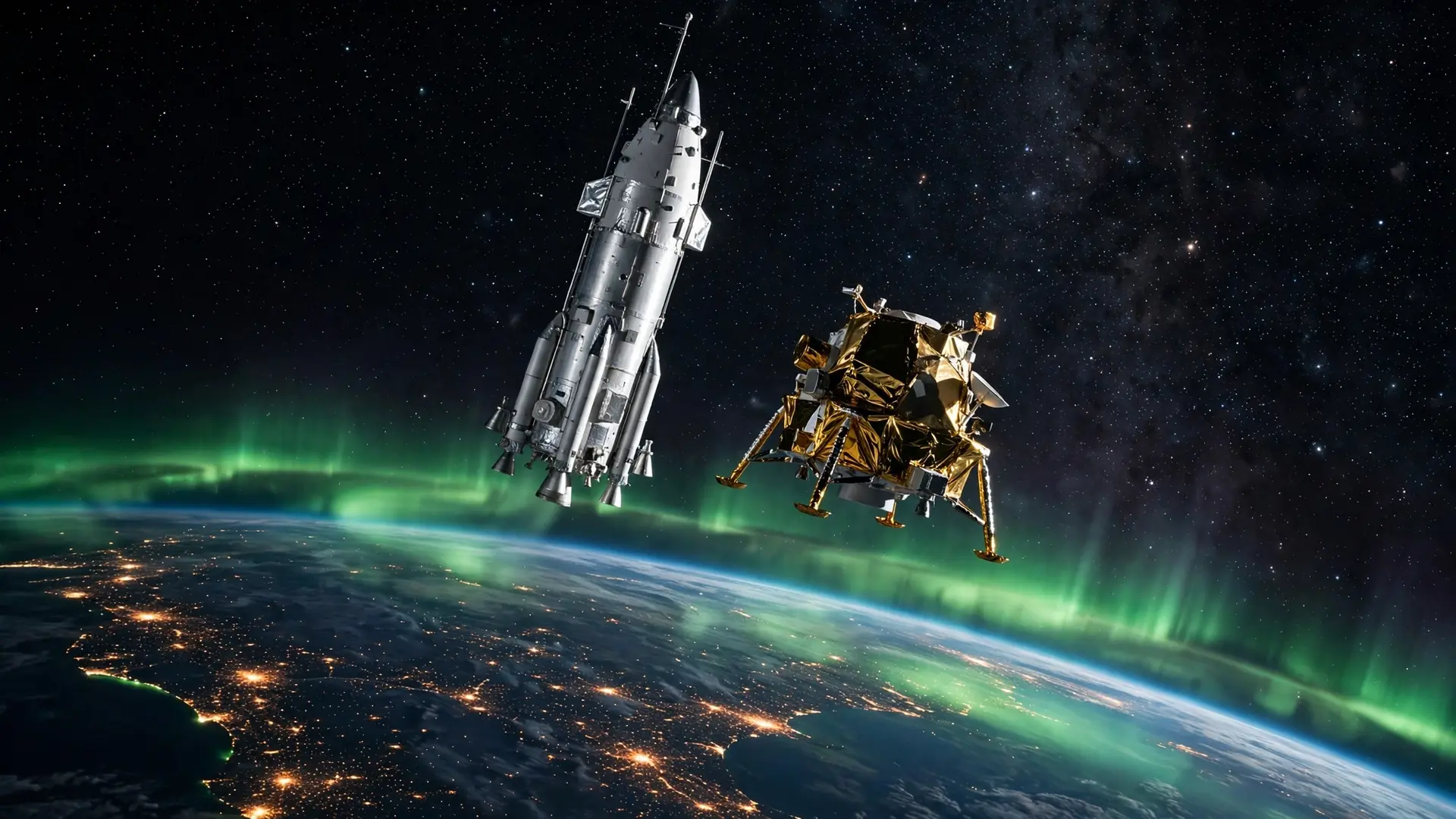
Read that way, Artemis III is not a demotion. It is the step Apollo refused to skip. Before Apollo 11, Apollo 9 flew the lunar module in Earth orbit with a crew aboard, wringing out the rendezvous it would later perform at the Moon. Gemini spent years inventing orbital docking from scratch. Artemis, by contrast, was drawn up to go from a crewed flyby straight to a landing, with no dedicated rehearsal in between. Isaacman’s verdict on that plan was blunt: it was not a pathway to success.
Earth orbit is where you want to discover a problem. If a docking goes wrong 460 kilometers up, the crew is hours from home, not days. Radio signals arrive effectively instantly instead of making the 2.6-second round trip at lunar distance. The crew can try again tomorrow. At the Moon, a stuck docking mechanism or a misbehaving seal is not an anomaly to investigate. It is the end of the mission, and possibly worse.
The rehearsal also buys the landers time to grow up. SpaceX still has to prove the orbital refueling its lunar Starship depends on, with a large-scale propellant-transfer test targeted for early 2027 and an uncrewed lunar demonstration late that year. Blue Origin is recovering from a New Glenn test-stand explosion in the spring of 2026. Both companies hold multibillion-dollar contracts to deliver crew-worthy landers, and both are behind where the old schedule needed them to be.
Four astronauts, one unifying link
The crew NASA named on June 9, 2026, reads like it was assembled for exactly this job. Commander Randy Bresnik, 58, nicknamed “Komrade,” has flown the space shuttle and a Russian Soyuz, and serves as assistant to the chief astronaut, managing crew insight into every Artemis vehicle. Pilot Luca Parmitano, 49, of the European Space Agency, has flown twice, walked in space six times, and commanded the International Space Station, the first Italian to do so.
Mission specialist Andre Douglas, 40, will be making his first spaceflight, but he trained as the backup for Artemis II, so he already knows Orion inside out. Mission specialist Frank Rubio, 50, holds the American record for the longest single spaceflight at 371 days, after a Soyuz coolant leak stranded him on the station, and became briefly famous for losing a space-grown tomato. Bob Hines serves as backup.
“He handled it with calm and clarity, and brought himself back safely. That tells you more about an astronaut than any CV ever could.”
The crew will have about a year to train, a sprint next to the three years Artemis II’s crew received. Bresnik framed the assignment as a bridge between eras.
“We are certainly humbled as a crew to be able to be your crew that executes this Artemis III mission in space, being that unifying link between the phenomenal Artemis II mission we just had two months ago and the Artemis IV mission that will follow ours.”
The hardware is already stacking
The pivot is not just a slide deck. In October 2026, NASA confirmed the Artemis III boosters are fully stacked inside the Vehicle Assembly Building: two 54-meter solid rocket towers, nose cones installed on September 30, with all four RS-25 engines mounted on the core stage. Next comes the systems tunnel and the “short stack” mating, then a rollout to Pad 39B for a tanking test, a full propellant-loading rehearsal, in the coming months. The crew will also run a launch-day rehearsal at the pad, emergency egress walkdown included.
From there the calendar fills in. A wet dress rehearsal of the SLS is planned before the end of 2026. Starship’s propellant-transfer test in early 2027. Artemis III itself no earlier than mid-2027. An uncrewed Starship lunar demonstration late in 2027. Then Artemis IV, early 2028: the first crewed landing, at the lunar south pole, the mission Artemis III used to be. It is a long road, and it runs through the Moon on its way to a permanent human presence on Mars.
Artemis III’s destination is not a place. It is a connection: one capsule, two landers, meeting in the dark 460 kilometers above Earth. The docking has to work the first time anyone tries it for real, and the only responsible place to try it is where failure is survivable. The Moon can wait. The handshake cannot.
Frequently asked questions
Will Artemis III land on the Moon?
No. Under NASA’s revised plan, announced in February 2026, Artemis III is a crewed Earth-orbit mission that tests rendezvous and docking between the Orion capsule and test versions of the commercial lunar landers. The first Artemis crewed Moon landing is now planned for Artemis IV in early 2028.
Who is on the Artemis III crew?
Commander Randy Bresnik, European Space Agency pilot Luca Parmitano, and mission specialists Andre Douglas and Frank Rubio, announced June 9, 2026, with NASA astronaut Bob Hines as the backup crew member.
When will Artemis III launch?
No earlier than mid-2027, from Launch Complex 39B at Kennedy Space Center aboard the Space Launch System. The date is a target, not a firm commitment, and depends on lander readiness and hardware processing.
Why rehearse the docking near Earth instead of at the Moon?
A problem in low Earth orbit leaves the crew hours from return with effectively instant communications and the option to try again; at the Moon the same problem could end the mission. The test also gives SpaceX and Blue Origin more time to mature their landers before a crewed descent.
When will astronauts walk on the Moon again?
Artemis IV, targeted for early 2028, is planned as the first crewed lunar landing at the Moon’s south pole, with Artemis V possibly following late that year. China is separately working toward a crewed lunar landing around 2030.
Sources & Research
The primary studies and reporting behind this story, linked for readers who want to check our work.
- NASA: Artemis III mission page · NASA
- “NASA reveals Artemis III crew that will take the next big step on its journey back to the moon” (June 9, 2026) · CNN
- “NASA rethinks Artemis path forward, accelerating launch cadence and adding 2027 mission” (February 27, 2026) · Aerospace America (AIAA)
- “NASA Finishes Artemis III Booster Stacking, Moves Closer to Launch Pad Testing” (October 2026, reporting NASA’s October 13, 2026 status update) · Daily Galaxy