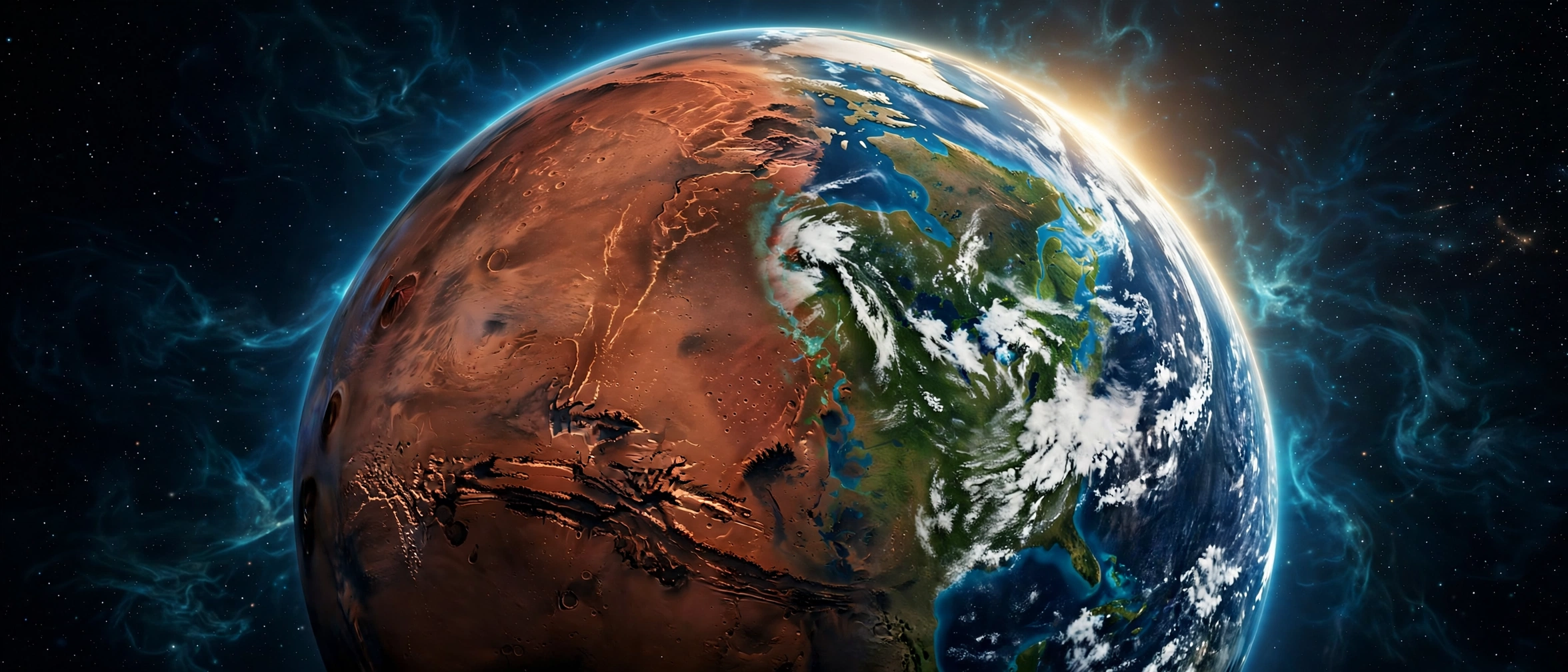
 Terraforming & Sci-Tech
9 min read
How to Turn Mars Into Earth: A Blueprint
From super-greenhouse gases to an artificial magnetosphere, here is the engineering sequence scientists have proposed to make Mars habitable.
Cosmic Replay
Topic Hub
How do you turn a frozen desert into a living world? This hub gathers everything Cosmic Replay has published on terraforming into one guided tour: the Mars blueprint, the Venus contrast, and a day inside the colony all of it is meant to build, plus the simulator where you can run the Mars experiment yourself.
The guided journey
The plan, the problem case, and then the payoff: what a finished world actually feels like to live in.
Stop 1 of 3
Start with the blueprint. Mars is the one world where the full engineering sequence has been thought through, step by step: warm it, thicken the air, shield it from the solar wind, then let water and oxygen follow.
Read “How to Turn Mars Into Earth: A Blueprint”Terraforming & Sci-TechFrom super-greenhouse gases to an artificial magnetosphere, here is the engineering sequence scientists have proposed to make Mars habitable.
Stop 2 of 3
Now the contrast. Venus is Earth’s twin in size and gravity, but terraforming it means doing the opposite job in a harder place: cooling a pressure cooker, burying an ocean’s worth of carbon dioxide, and importing the water it lost.
Read “Terraforming Venus: The Harder, Hotter Twin”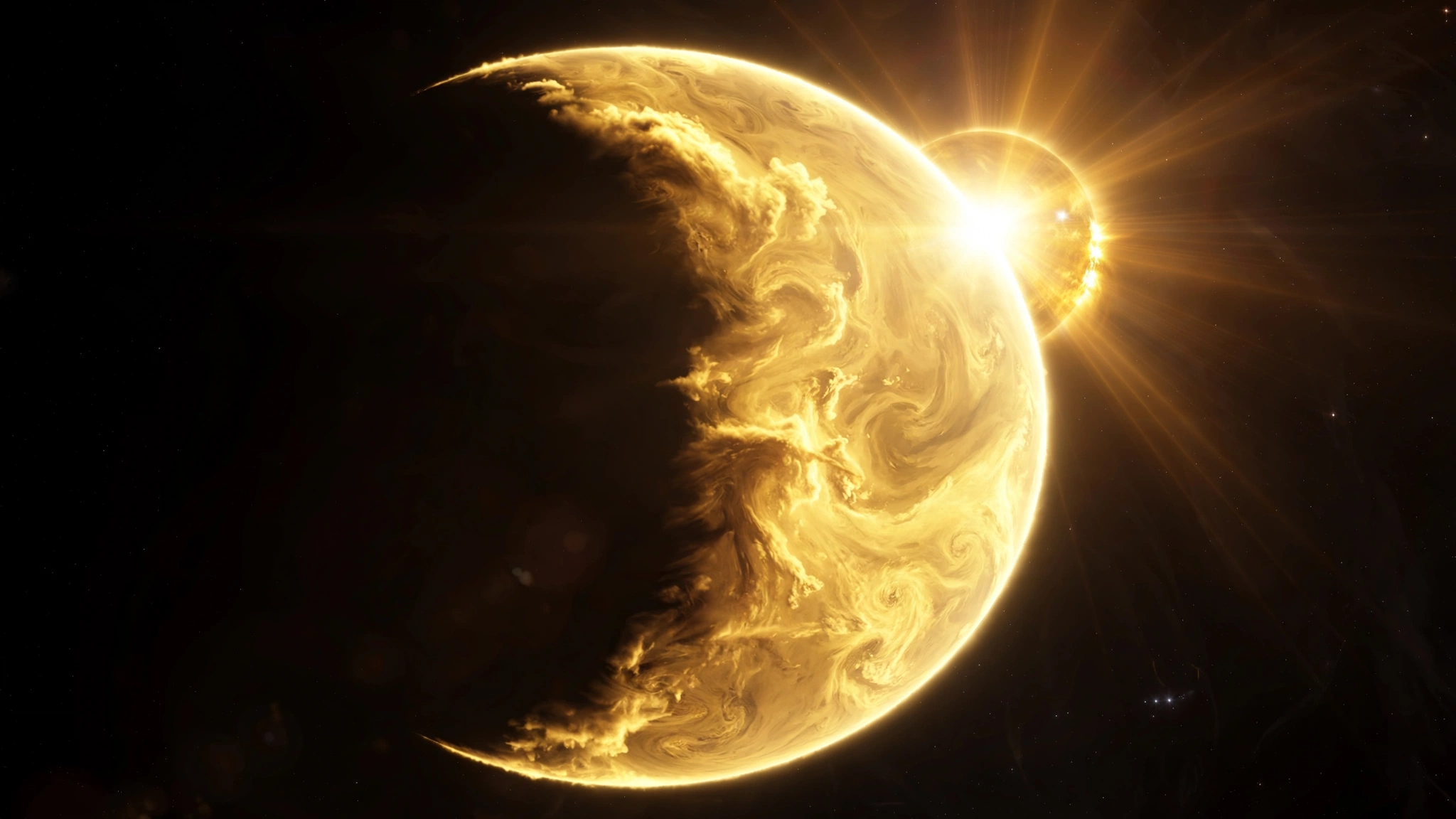 Terraforming & Sci-Tech
Venus is Earth’s twin in size and gravity, but its surface is a 465°C pressure cooker. Terraforming it means shading the planet, burying its CO2, and importing water.
Stop 3 of 3
End inside the result. One full sol in a finished Martian colony, hour by hour: butterscotch dawns, greenhouse breakfasts, dusty walks outside, and a sunset that glows blue. This is what all the engineering is for.
Read “A Sol on Mars: One Day in a Martian Colony”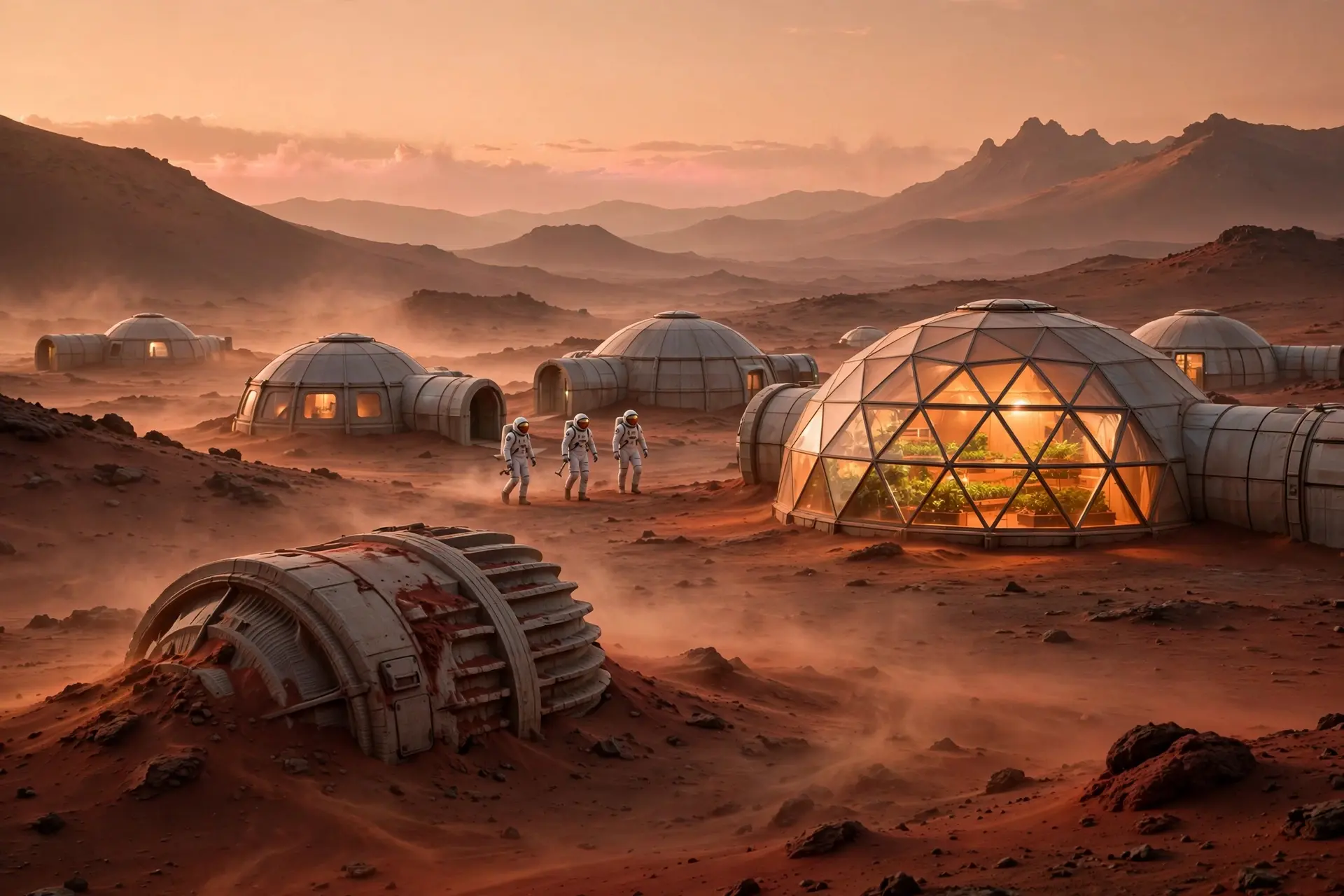 Terraforming & Sci-Tech
One Martian sol, 24 hours and 39 minutes, through butterscotch dawns, greenhouse breakfasts, dusty EVA walks, and blue sunsets: daily life on Mars, hour by hour.
The overview
Terraforming is planetary engineering with a simple goal and an enormous to-do list: make another world’s climate run itself the way Earth’s does, warm enough for liquid water, thick enough air to stand under, and eventually air a human can breathe. Every serious proposal breaks the job into the same sequence. Change the temperature first, because temperature controls everything else. Then fix the atmosphere’s thickness. Water follows physics from there. Oxygen, the part everyone pictures first, comes last, and slowest.
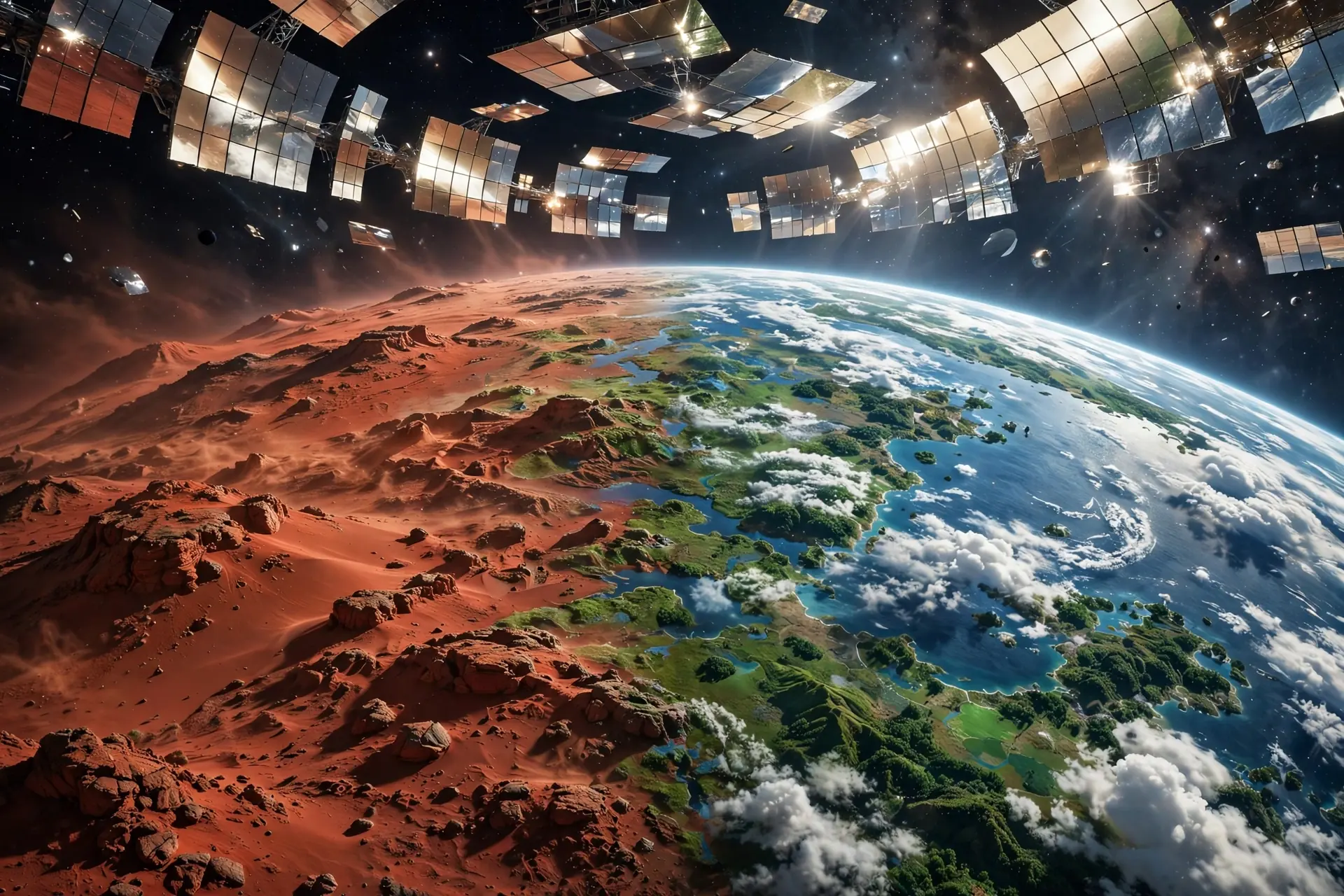
Mars is the tractable case. It is cold and its air is a whisper, about 1% of Earth’s surface pressure, but the raw ingredients are on site: water ice at the poles and under the surface, carbon dioxide frozen into the polar caps and soaked into the soil. The blueprint starts with super-greenhouse gases manufactured on Mars to warm the planet, which frees that frozen CO2, which thickens the air, which warms things further. A magnetic shield station parked between Mars and the Sun would slow the solar wind that strips the new atmosphere away. Even the optimists’ version takes centuries to reach open water, and the honest studies, including Jakosky and Edwards in 2018, warn that the accessible CO2 alone may not be enough to finish the job.
Venus is the same problem with every dial turned the wrong way. Earth’s twin in size has too much atmosphere, not too little: 92 bars of CO2 at 465°C, a runaway greenhouse that boiled its oceans away early in its history. Terraforming Venus means shading the planet to cool it, converting or burying nearly all of that air, and replacing the lost water, a job measured in tens of thousands of years even in the boldest papers. The pragmatic Venus plan is not the surface at all: floating habitats at 50 to 55 km altitude, where the pressure is Earth-like and the temperature is mild, could come centuries sooner.
And the destination of all this engineering is not a statistic, it is a morning. A finished Mars colony runs on sols, days 39 minutes longer than ours, under a butterscotch sky that turns blue around the setting Sun. People would live under radiation shielding, farm under glass, and step outside into landscapes that took a planet-sized project to make merely survivable, let alone pleasant. That daily reality, hour by hour, is where the guided tour ends, because it is the only honest way to judge whether the blueprint was worth it.
Nobody is terraforming anything this decade, and the ethical questions, above all what we owe any native Martian microbes, are unresolved. But the physics is real, the studies are published, and the sequence is understood well enough to argue about seriously. Start at stop one.
Quick answers
Terraforming means reshaping a planet’s climate, atmosphere, and surface so that Earth life, ideally including unprotected humans, can live there. In practice it is a sequence: change the temperature, thicken or thin the air, get liquid water stable on the surface, and only much later worry about breathable oxygen. The word was coined by science fiction writer Jack Williamson in 1942, but planetary scientists have studied it seriously since Carl Sagan’s papers in the 1960s and 1970s.
Warming is the fast part, relatively speaking: studies of super-greenhouse gases suggest the temperature could be raised enough to release Mars’s frozen carbon dioxide within about a century of sustained effort. A breathable atmosphere is another matter entirely, likely thousands of years at best. And a 2018 study by Bruce Jakosky and Christopher Edwards found that Mars’s accessible carbon dioxide is probably not enough to thicken the air to Earth-like pressure with any technology we can currently imagine, so the full job may need gases imported or manufactured on an enormous scale.
Mars has too little atmosphere; Venus has far too much, and it is the wrong kind. Its surface sits at about 465°C under 92 bars of carbon dioxide pressure, with sulfuric acid clouds above. Terraforming Venus means shading the whole planet, removing or burying nearly all of that atmosphere, dealing with a day that lasts 243 Earth days, and importing water the planet lost billions of years ago. Mars needs warming and thickening; Venus needs cooling, thinning, and a new water supply, all at once.
Not in the open-air sense. The Moon’s gravity is too weak and it has no magnetic shield, so any atmosphere we gave it would leak away to space. The realistic version is paraterraforming: roofed valleys, domed craters, and sealed habitats, where the “sky” is engineered locally instead of planet-wide. That is also the honest near-term model for early Mars settlements.
It is a genuine debate, not a settled one. If Mars hosts native microbial life, even in deep refuges, reshaping the planet could destroy a second, independent origin of life before we understand it, which is why planetary protection rules govern every lander today. The counterargument is that a living Mars, seeded carefully, preserves life against the day Earth cannot. Our features present the engineering first and let the ethics stay visible alongside it.
Speak the language
Want everything, unfiltered? Browse all terraforming stories