Missions
Why NASA Is Flying a Nuclear Drone to Titan
NASA's Dragonfly is an 875-kg nuclear octocopter launching in July 2028 to fly Titan's dunes and sample the chemistry that came before life. Here is why it has to fly.
In December 2034, a machine the size of a small car will wake up on a dune field a billion kilometers from Earth. Eight rotors will spin up in air thicker than the air you breathe now, lift it off frozen hydrocarbon sand, and carry it a few kilometers to a place no rover could ever reach. Its name is Dragonfly, and it is the first rotorcraft built to explore another world.
NASA's Dragonfly is an 875-kilogram nuclear-powered octocopter launching on a SpaceX Falcon Heavy in July 2028 and landing on Saturn's moon Titan in late 2034. It will fly between 20 and 30 sites over 3.3 years, drilling into the surface to study the prebiotic chemistry that preceded life on Earth. It is not hunting for aliens.
Why a drone, and not a rover?
A lander was tried first. In January 2005, the European Huygens probe parachuted through Titan's orange haze, touched down among rounded ice pebbles, and kept transmitting for about 70 minutes, far longer than the three minutes it was built for. It sent back 376 pictures of a world that looked like a dried riverbed on a wet morning. Then Cassini slipped below the horizon and the relay went quiet, and that was the whole mission: one patch of ground, one afternoon, on a moon the size of a planet.
A rover was the next idea, and the terrain killed it. Titan's surface is dunes, river channels, broken ice and craters, mapped only in coarse radar from Cassini's flybys. A wheeled vehicle would have to cross ground nobody has seen up close, with nobody to push it out of a sand trap a billion kilometers from help.
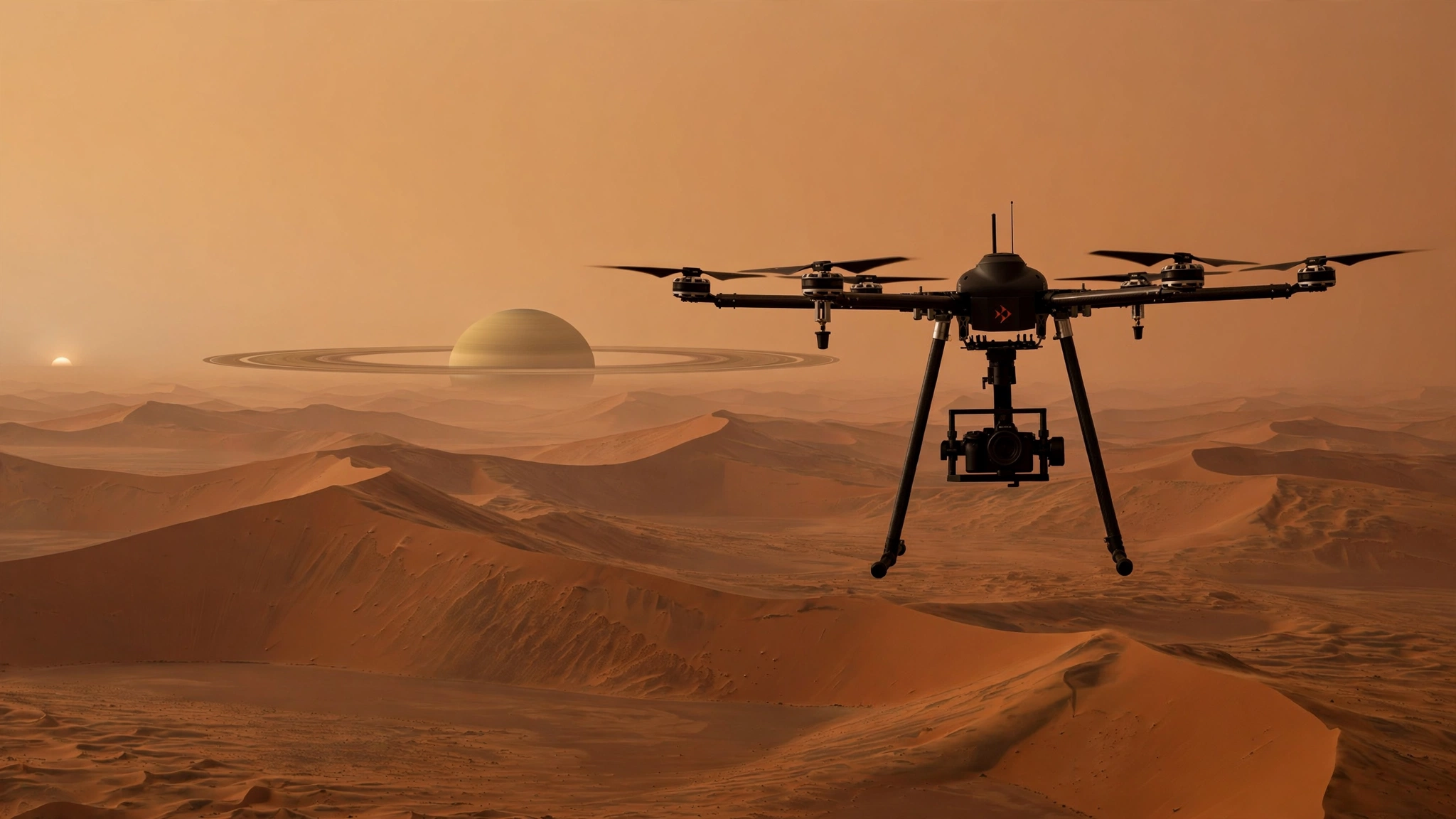
Titan's air does the heavy lifting: surface pressure runs about one and a half times Earth's, and gravity is only about 14 percent of ours, so a rotor that would strain on Earth spins easily there. NASA puts it plainly: Titan's dense, calm atmosphere and low gravity make flying the ideal way to travel to different areas, freeing Dragonfly from constraints a rover would face trying to travel over the moon's potentially rough and sandy terrain. One hop can cover tens of miles in under an hour, ground a rover would need months to crawl.
The proof that rotors work off Earth already exists, and it is tiny. Ingenuity, the 1.8-kilogram helicopter that rode to Mars under the Perseverance rover, was built for five flights in 30 days. It flew 72 times over nearly three years, covering 17 kilometers before a damaged rotor ended it in January 2024. Dragonfly is the same idea scaled up by a factor of nearly 500 in mass, carrying a laboratory instead of a camera, on a moon whose air is far thicker than Mars's whisper.
A world that behaves like Earth, and isn't
Titan earns the trip. At about 5,150 kilometers wide it is the solar system's second-largest moon, bigger than Mercury, and the only moon with a dense atmosphere. Like Earth's, its air is mostly nitrogen, and the resemblance ends there. Titan's surface sits near minus 179 degrees Celsius, cold enough that water ice is as hard as granite, and the rain that falls is liquid methane. Cassini found lakes and seas of methane and ethane near the poles, some bigger than Lake Superior, fed by rivers that cut channels through the highlands, the only place beyond Earth with a working weather cycle, running on a different liquid.
Dragonfly will not land near those lakes. Its destination is the equator, in a dune field called Shangri-La, where the sand is not silicate at all but most likely grains of frozen hydrocarbons, laid down by Titan's haze and sculpted into dunes that run for hundreds of kilometers. The landing ellipse sits on smooth ground between the dunes, near an 80-kilometer-wide crater called Selk. The dunes are the first stop; the crater is the point of the whole mission.
So why, you might wonder, would a dune field on a frozen moon matter to anyone trying to understand life? Because Titan's air is a chemistry set that never stops running. Sunlight and charged particles break methane and nitrogen apart high in the atmosphere, and the fragments recombine into molecules of growing complexity that rain down onto the surface. In 2020, astronomers using the ALMA observatory in Chile found cyclopropenylidene in Titan's sky, a small ring-shaped molecule never before detected in any planetary atmosphere. It belongs to the same family as the ring-shaped molecules behind DNA and RNA.
“When I realized I was looking at cyclopropenylidene, my first thought was, 'Well, this is really unexpected.' Titan is unique in our solar system. It has proved to be a treasure trove of new molecules.”
The destination is a crater that held a soup
Selk is where the chemistry gets interesting. When the impact that dug the crater struck, it melted Titan's water ice into a pool of liquid water that mixed with the organic rain from the sky. The mixture is often described as a primordial soup. The melt likely stayed liquid for up to tens of thousands of years in the deeper layers, long enough for real chemistry to run, before freezing solid. The upper layers, the ones Dragonfly can reach, froze far faster, within centuries. That frozen soup is still there in the crater floor, and Dragonfly is going to dig it up.
Laboratory work says the soup would have cooked something worth finding: Titan haze analogs mixed with liquid water quickly produce amino acids and nucleobases, the building blocks of proteins and DNA. The K2-18 b spectrum shows how strictly the field vets a chemical hint of life. A study published in May 2026 went further, testing which of those building blocks could actually form inside a Selk-sized melt pool. Its answer came with a gatekeeper: ammonia. With no ammonia, only adenine and one fatty acid were thermodynamically favored. Add one percent ammonia and the full set, nucleobases, ribose and fatty acids, opens up. Dragonfly's mass spectrometer will test that prediction on the real thing.
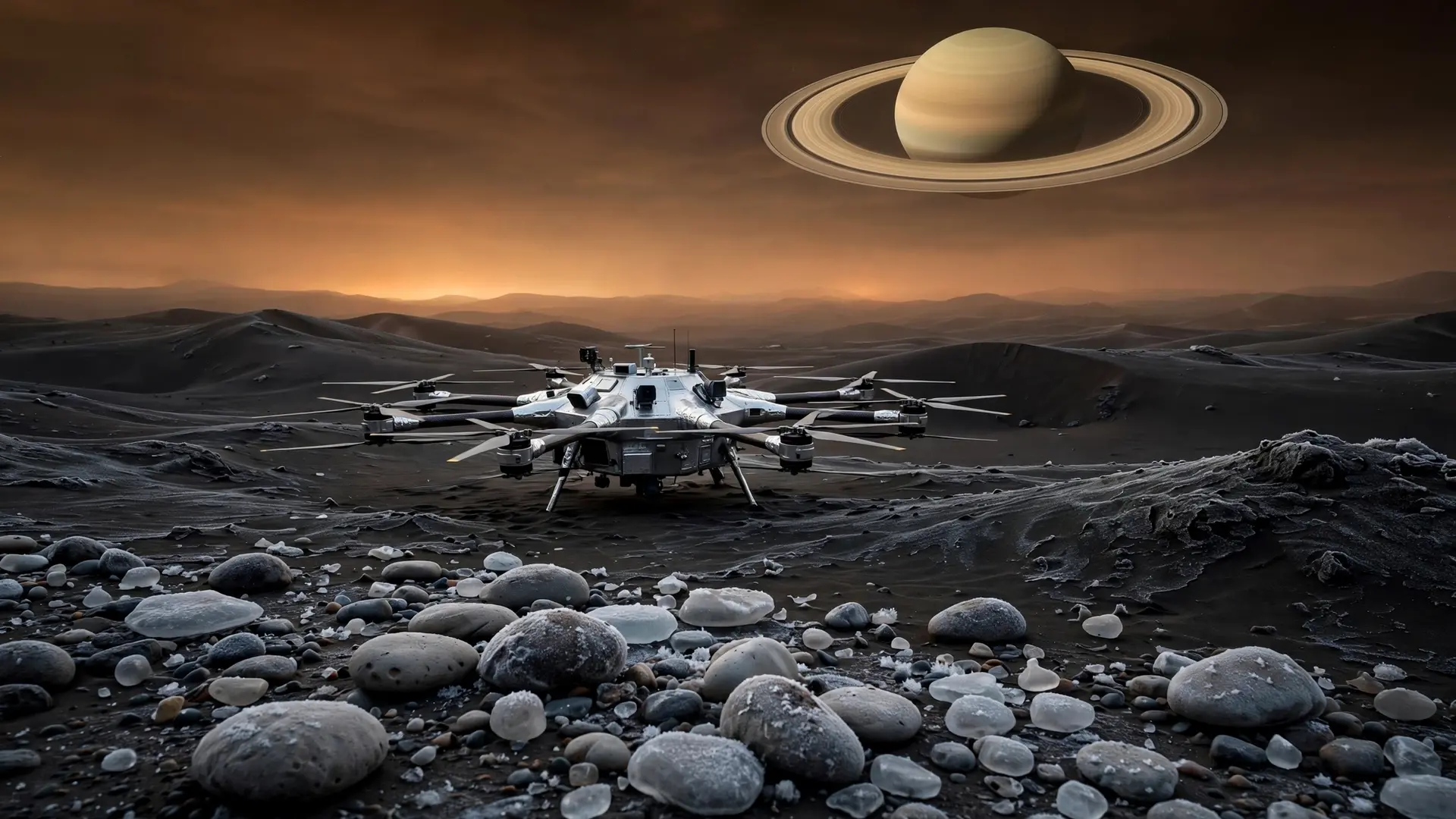
The toolkit is built for that job. DraMS, a mass spectrometer, will analyze drilled samples. DrACO, the drill, will cut into the surface and feed it. DraGNS will read the elemental composition of the ground, DragonCam will photograph the sites from air and ground, and DraGMet will track Titan's weather and listen for quakes. Dragonfly lands, drills, analyzes, recharges from its nuclear generator, and flies again, about one flight every Titan day or two, and a Titan day lasts nearly 16 Earth days.
What it is not
Here is where the honest version parts ways with the headlines. Dragonfly will not visit the methane lakes. They sit near Titan's poles; the rotorcraft lands at the equator, where the dunes are. It will not find life, and it is not built to. Its principal investigator, Elizabeth 'Zibi' Turtle, has said so herself.
“Dragonfly isn't a mission to detect life. It's a mission to investigate the chemistry that came before biology here on Earth.”
There is also a cold-water result to carry along. Titan hides a subsurface ocean of liquid water, thought to hold more than 12 times the volume of Earth's oceans, and for years it looked like the obvious place for life. But a 2024 study led by Catherine Neish, a co-investigator on Dragonfly, calculated how much organic food could actually reach that ocean from the surface, carried down by impact melt over billions of years: about 7,500 kilograms of glycine a year, the simplest amino acid. She put the verdict in one sentence.
“One elephant per year of glycine into an ocean 12 times the volume of Earth's oceans is not sufficient to sustain life.”
That is not a reason to stay home. It is the reason the surface matters more than the ocean: the ocean is sealed away and starving, while the surface is where water and organics actually met, in craters like Selk, and where a flying laboratory can reach them. Dragonfly will not find life. It will find out how far chemistry got before life, which is the question every search for life depends on.
The long road there
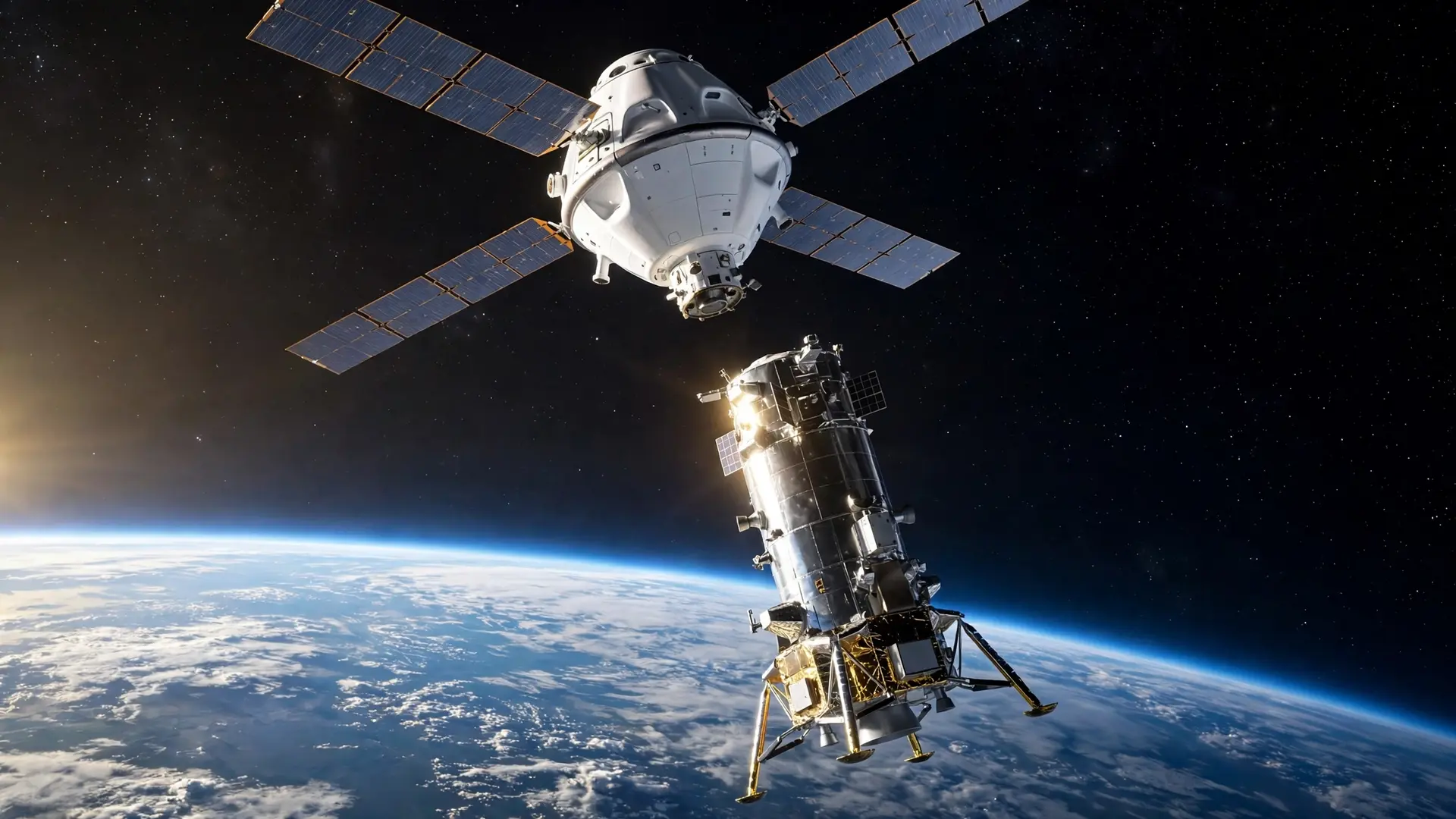
Getting there is the hard part, and the mission has already survived its share of trouble. NASA selected Dragonfly in June 2019 as the fourth mission in its New Frontiers program. It was confirmed in April 2024 at a lifecycle cost of 3.35 billion dollars. The original cost cap, 850 million dollars, covered only the mission's development costs, and even those had grown to 2.6 billion dollars by April 2024, about three times the cap. A September 2025 audit by NASA's inspector general flagged thin cost reserves and questioned its financial tracking, and launch has already slipped more than two years from its original April 2026 target. It passed its critical design review in April 2025, and full assembly began at the Johns Hopkins Applied Physics Laboratory in early 2026.
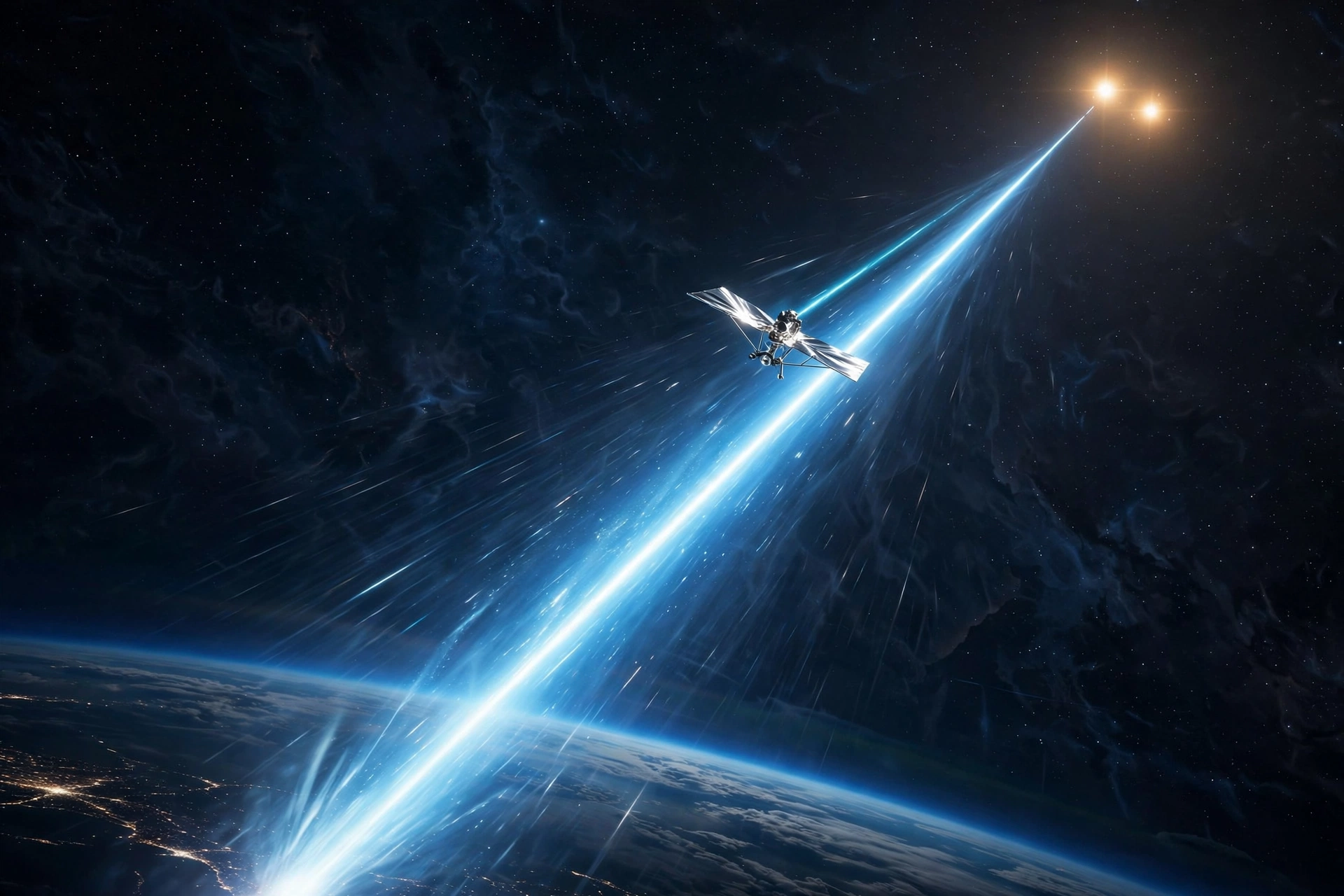
The plan now: a SpaceX Falcon Heavy lifts off from Launch Complex 39A in the July 5 to 25, 2028 window, under a 256.6 million dollar launch contract awarded in November 2024. The cruise lasts about six and a half years, with gravity assists from Venus and Earth on the way, arriving in December 2034. The landing runs the same way: heat shield, parachutes, then, about a kilometer above the dunes, Dragonfly flies itself down, choosing its landing spot with radar and lidar. Over the next 3.3 years it will visit 20 to 30 sites, covering about 70 miles from its first landing spot. If six and a half years sounds abstract, try the trip yourself and see what the crossing costs at any speed.
One date is already on the calendar for readers, not just engineers. On October 29, 2026, NASA opened sign-ups to put your name on a microchip riding aboard Dragonfly all the way to Titan's surface. Registration closes at 11:59 p.m. Eastern on January 15, 2027, at go.nasa.gov/dragonfly-names, and every name gets a digital boarding pass in return. The chip flies with the drill and the cameras: a machine built by thousands, carrying the names of anyone who wants to come along.
One Titan year later
Huygens landed in January 2005. Dragonfly lands in December 2034, almost exactly one Titan year later, a Titan year being 29 and a half Earth years. The first visitor stayed an afternoon and photographed a riverbed. The second stays three years, brings a laboratory, and flies. Between them, one full turn of Titan's seasons, and a question that has waited the whole time: how far can chemistry go toward life on its own? In 2034, a drone the size of a car starts answering it, one dune at a time.
Frequently asked questions
When does NASA's Dragonfly launch?
The launch window runs July 5 to 25, 2028, on a SpaceX Falcon Heavy from Launch Complex 39A at Kennedy Space Center. After a cruise of about six and a half years, Dragonfly is expected to arrive at Titan in December 2034.
Is Dragonfly looking for life on Titan?
No. Dragonfly is a prebiotic chemistry mission, not a life-detection mission. As principal investigator Elizabeth 'Zibi' Turtle puts it, it investigates the chemistry that came before biology on Earth, how far the chemical steps toward life can progress in a real planetary environment.
Why is Dragonfly a flying drone instead of a rover?
Titan's terrain is mapped only in coarse radar, so wheels would be a gamble on unseen ground, while its thick air and low gravity make flight easy. A lander can only study one spot, a rover would crawl, and a rotorcraft can visit 20 to 30 sites across about 70 miles in 3.3 years.
Will Dragonfly visit Titan's methane lakes?
No. The lakes and seas sit near Titan's poles, while Dragonfly lands in the equatorial Shangri-La dune fields and works its way toward Selk crater. The dunes and the crater are where water and organics mixed, which is what the mission came to study.
Can I send my name to Titan on Dragonfly?
Yes. NASA opened sign-ups on October 29, 2026, and names submitted before 11:59 p.m. Eastern on January 15, 2027, at go.nasa.gov/dragonfly-names will ride to Titan on a microchip aboard the spacecraft. Each participant receives a digital boarding pass.
Sources & Research
The primary studies and reporting behind this story, linked for readers who want to check our work.
- NASA Science, "Dragonfly Spacecraft and Instruments"
- NASA Science, "Dragonfly Science"
- Lorenz, R. et al. (2021), "Selection and Characteristics of the Dragonfly Landing Site near Selk Crater, Titan" · The Planetary Science Journal
- Nixon, C. et al. (2020), "Detection of Cyclopropenylidene on Titan with ALMA" · The Astronomical Journal, 160:205
- Neish, C. et al. (2024), "Organic Input to Titan's Subsurface Ocean Through Impact Cratering" · Astrobiology, 24(2), 177-189
- Madan, I. & Pearce, B. (2026), "Prebiotic Chemistry Insights for Dragonfly. II. Thermodynamic Favorability of Nucleobases, Ribose, and Fatty Acids in Selk Crater on Titan" · The Planetary Science Journal, 7:107